
Originally published in INCITE Magazine Volume 46, Issue 4
For this edition of From the Archive, Irene Guidotti, Digital Librarian at the Australian Museum Research Library, and Janelle Townsend, Creative Producer, Science Engagement and Public Programs at the Australian Museum, bring us a story that bridges past and present — showing how the treasures of our collections continue to inform and inspire the world around us.
The Australian Museum Research Library’s participation in the Sydney Science Trail is a vivid example of how the materials held in our libraries, museums, and archives are not static artefacts but living resources that shape contemporary science, spark community curiosity, and contribute to ongoing conversations about our future.
This piece reminds us that every rare book, illustration, and historical record has the power to illuminate modern discovery — connecting centuries of exploration with the questions and conversations of today.
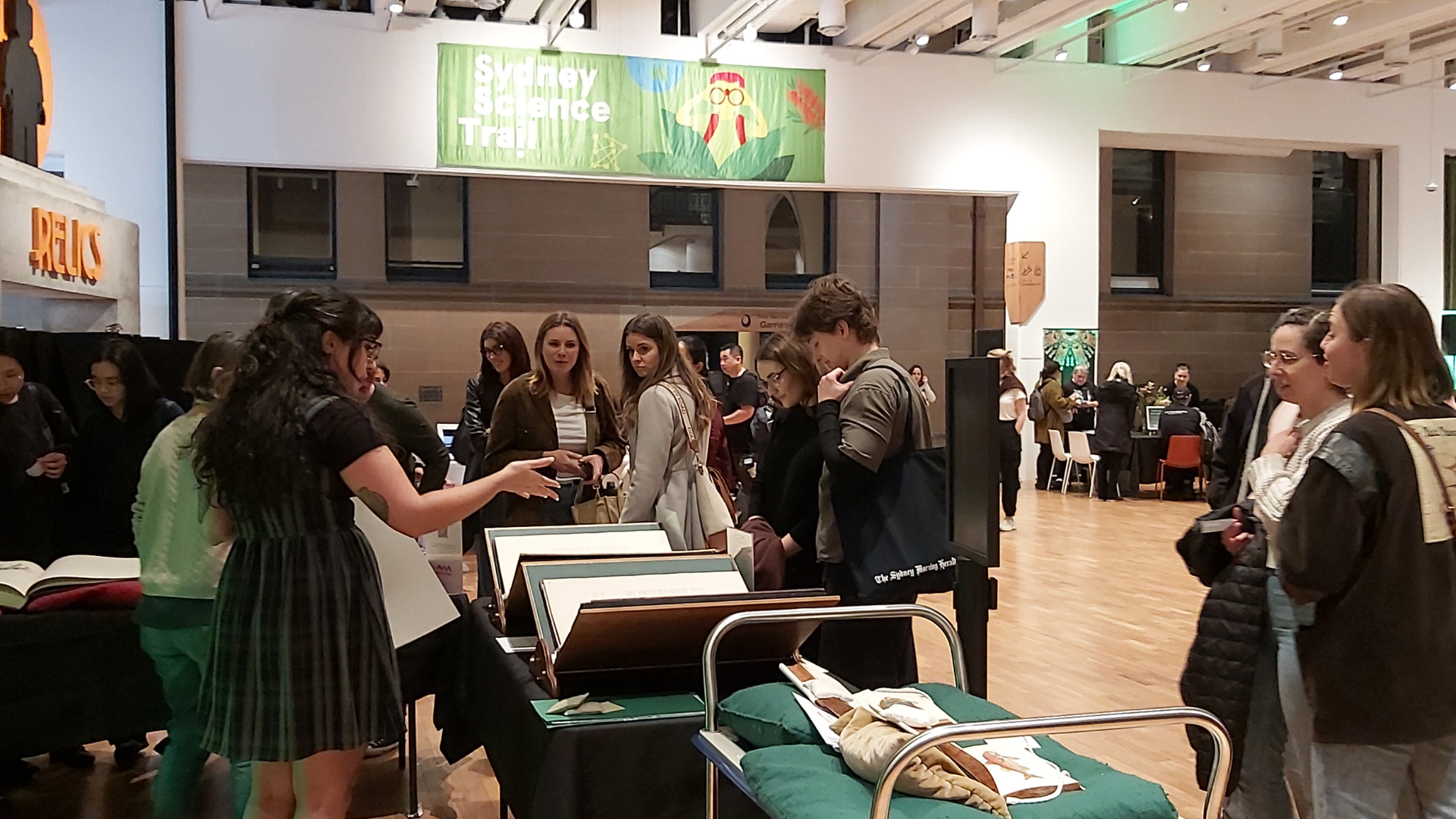
In August 2025, the Australian Museum Research Library (AMRL) joined the Sydney Science Trail (SST) for its most successful year yet. Through a rare book display featuring tactile facsimiles and conversations with library staff and volunteers, visitors discovered how centuries-old natural history works continue to shape modern science.
Delivered across National Science Week, SST is a collaboration between the Australian Museum and Royal Botanic Gardens, Sydney that has successfully delivered educational and community events for the past six years. Designed as an annual science festival with something for everyone, SST aims to capture imagination and inspire curiosity by highlighting research from STEM organisations across NSW and interstate. Its program includes school excursions, community days for families, and an evening networking event for the adult science community. Each year, SST engages over 14,000 participants from Greater Sydney and beyond.
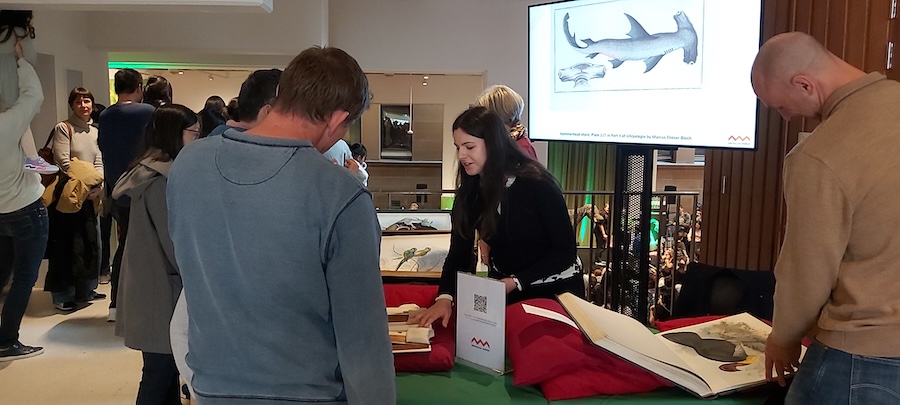
The Australian Museum’s SST Community Day is a free, museum-wide event featuring the SST Expo, which brings together over 20 STEM organisations including universities, government bodies, citizen science groups, and research institutions. Participants engage in science shows, workshops, and activations showcasing the spectrum of research undertaken by the Australian Museum Research Institute.AMRL’s participation across SST’s Community Day and The Science Social events reflected a growing curiosity about what lies behind the Museum’s collections, and is a reminder that libraries are living parts of the scientific ecosystem. When visitors realised they could interact with replicas of John and Elizabeth Gould’s Birds of Australia, the sense of wonder was palpable.
Established in 1836, the AMRL is one of the oldest continuously operating natural history libraries in the world and the second oldest in Australia. From its beginnings, when a bookcase was provided for works on scientific subjects, the collection has grown to nearly 200,000 volumes, representing centuries of exploration, taxonomy, and discovery.
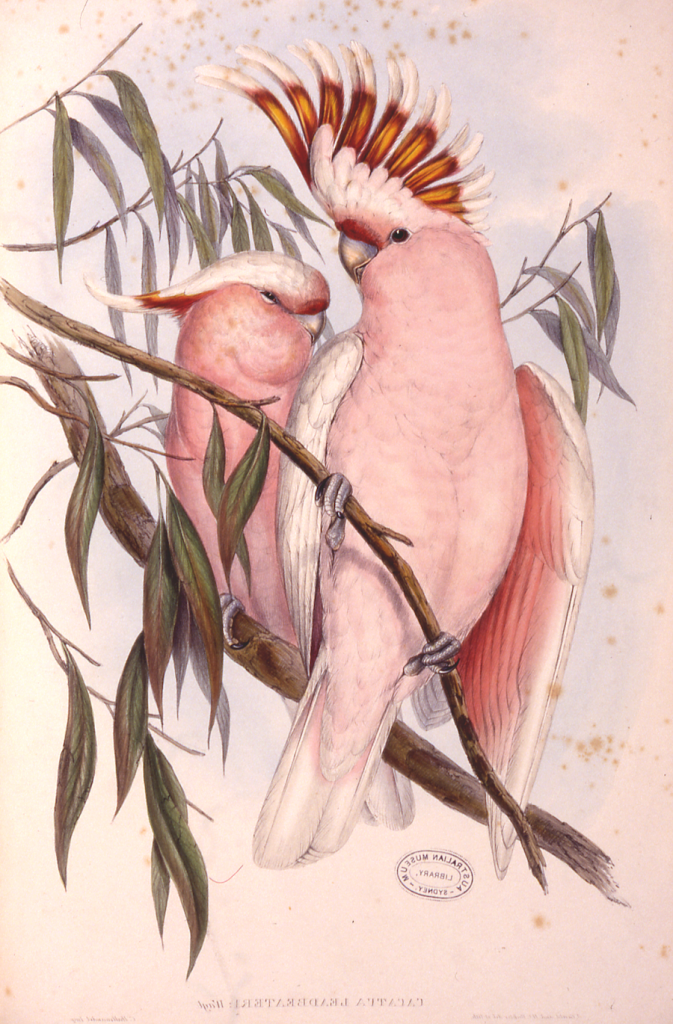
The Library’s early years were shaped by collaboration and curiosity, with books, correspondence, and specimens exchanged among scientists and collectors to build the Museum’s growing collections. Among the treasures acquired were rare works by naturalists William Swainson and John Gould, whose vibrant lithographs remain visitor favourites today.
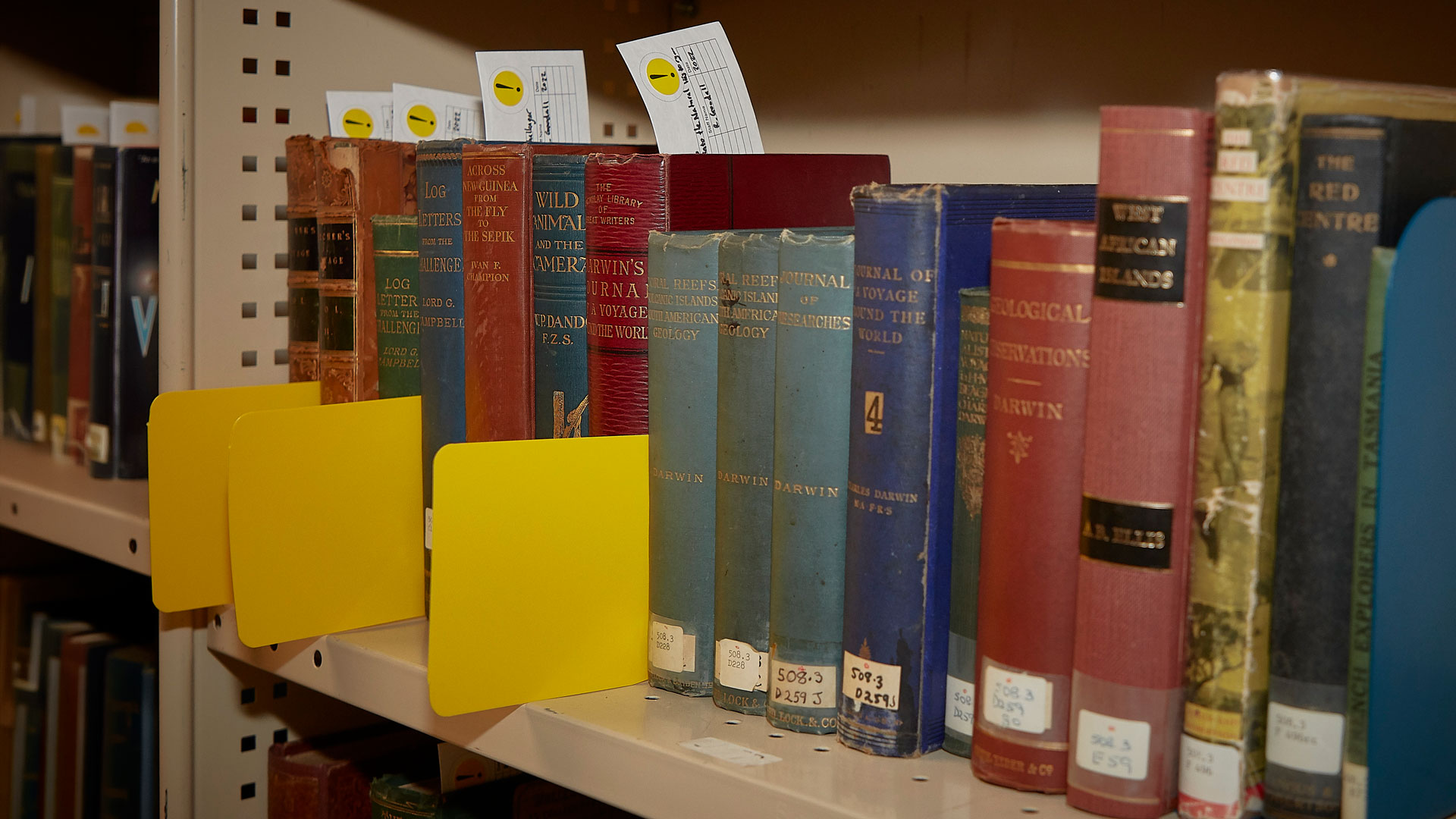
By the late 19th century, the AMRL had become a key research hub, housing expedition reports, scientific journals and publications from around the globe. Many volumes, including Maria Sibylla Merian’s Metamorphosis Insectorum Surinamensium (1705), Gerard Krefft’s The Snakes of Australia (1869), and Guillaume Rondelet’s Libri de Piscibus Marinis (1554), are still consulted by researchers, offering a window into the evolution of both science and printing.
Today, the AMRL continues this dual mission: supporting the research needs of Museum staff and visiting scholars, while sharing its heritage through displays, exhibitions, and educational programs.
In 2024, the Museum identified an opportunity to use SST to connect the broader community with the Research Library's collection and highlight its significance to scientific research. The AMRL display proved immensely popular at both The Science Social (attended by over 270 adult science enthusiasts), and the Community Day (attended by over 6,500 visitors). Attendees viewed Fishes of Ceylon (1834) by John Whitchurch Bennett, Gould’s Birds of Australia (1848), and Mammals of Australia (1863), with other digitised images showcased. Visitors spoke with library staff and volunteers and directly engage with recently-commissioned replica books of Elizabeth and John Gould Australian bird illustrations.
Building on that success, the AMRL returned to SST Community Day and Science Social events in 2025. With a combined visitation of over 11,000, this proved to be an even greater opportunity to engage museum visitors and expand the library’s reach and impact, especially with children and family groups, a new audience for the AMRL, which is not normally open to the public. An addition to the stall this year was a QR code directing participants to the Library catalogue and digitised publications online. As a result, the AMRL webpage received a 59% increase in traffic over the week of SST compared to that of the previous week.
Successful participation in SST has complemented other Library and Archives community engagement initiatives. The Birds of Australia: John and Elizabeth Gould STORYBOX digital experience toured NSW from 2024-2025 featuring the Gould’s story and new digital scans of The Birds of Australia through a conservation and First Nation storytelling lens. At the Museum in June and July 2025, the experience was supplemented with a display of the Gould’s original works, interactive digital books, and public engagement events using the replica volumes.
Meanwhile, the inaugural Scientist for a Day: Librarian and Archivist full-day school holiday workshop sold out across four sessions held in July and October. Designed for primary school aged children, the workshops offered a tour of the rare books collection, the chance to create their own scientific drawings and keepsake journals, and insight into the behind-the-scenes work of the Museum’s librarians and archivists. Together, these public events and programs highlight how the Library’s collections can inspire curiosity across all ages.
As the Australian Museum approaches its 200th anniversary in 2027, events like SST are more than community celebrations. Once again, the rare book stall and program confirmed that diverse audiences want to see, touch, and experience the stories within the collection.
In both 2024 and 2025, visitors showed keen interest in the authors, illustrators, and naturalists behind the rare books on display, prompting lively discussions about the Library’s wider collection and its role in documenting scientific discovery. Many scanned QR codes for more information or asked when the next display would be held. These small moments of connection reveal something profound: the Research Library is not merely a repository, but continues to spark curiosity and foster engagement with the stories of science.
Looking ahead, the AMRL is exploring to build on this enthusiasm. Future events could include more interactive elements, giving visitors new ways to engage with the Library’s collections beyond the gallery. As the Museum prepares for its bicentenary, the Research Library’s role will only grow stronger: preserving knowledge, sharing its narratives, and reminding us that discovery often begins with a book.
0 Comments