
Originally published in INCITE Magazine Volume 46, Issue 2
Documentary heritage reflects the diversity of languages, peoples and cultures. It is the mirror of the world and its memory. But this memory is fragile. Millions of textual and print items such as books, manuscripts, newspapers, photographs and governmental records; millions of films, audio and video tapes and discs are at risk of crumbling into dust or fading away and disappearing for eternity! (Safeguarding the documentary heritage of humanity | UNESCO)
Australian cultural institutions hold an extraordinarily rich diversity of collections that tell the story of our nation. While individually these are recognised by the galleries, libraries, archives and museums (GLAM) that house them, their significance is often unrecognised – our so-called Cinderella collections.
The UNESCO Memory of the World program seeks to provide a means to identify and ensure preservation of our collections through a rigorous, well managed approach of assessing the significance of nominations of collections. Most importantly it gives visibility to these extraordinary collections. Launched by UNESCO in 1993, the program aims ‘to guard against collective amnesia calling upon the preservation of the valuable archive holdings and library collections all over the world ensuring their wide dissemination’. It is designed to recognise collections that are critical to our identity and knowledge.
In 2000, the Australian Register was established under the oversight of the world’s second-ever national committee of its kind. It was established by Dr Jan Lyall of the National Library of Australia. It is a testament to the work of many distinguished professionals that the program has evolved and grown, now ably led by Dr Roslyn Russell, with a fabulous team led by Christine Yeats assessing nominations for inclusion in the register.
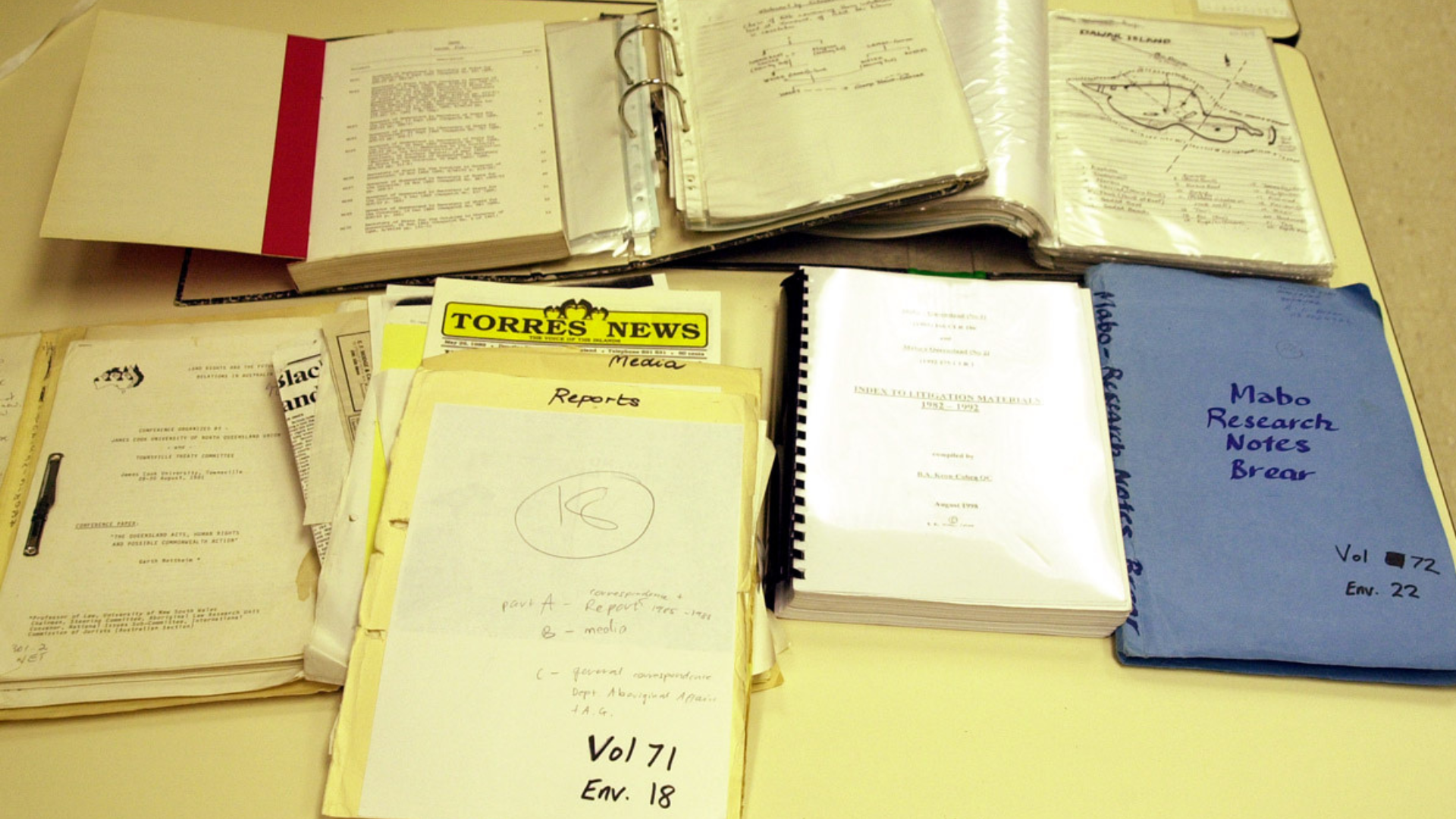
In 2001, the first inscriptions to the Australian Register were made: MS1, the Endeavour Journal of James Cook, and the Mabo Case Manuscripts—both held by the National Library of Australia. The Endeavour Journal, written by Captain James Cook, is a detailed account of his first voyage from 1768 to 1771 and reflects the scientific and imperial ambitions of the period. These daily entries, later submitted to the British Admiralty, offer insights into Cook’s observations, discoveries, and the broader geopolitical context in which he sailed.
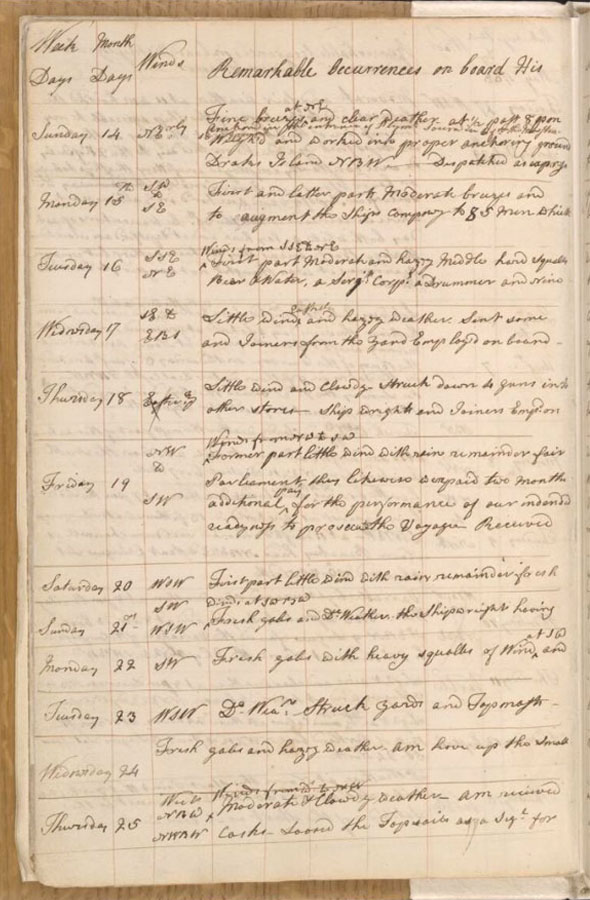
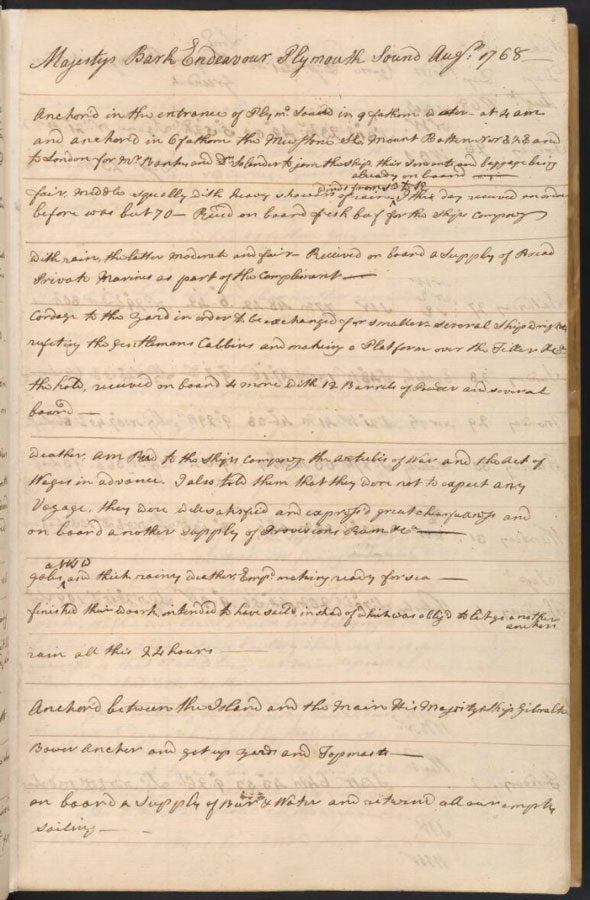
At a time when European powers were competing to expand their empires, Britain was actively seeking to strengthen its political and economic influence. On 30 July 1768, the Lords of the Admiralty issued Cook with two sets of instructions. The first, public directive was to observe the transit of Venus from Tahiti—part of a broader Enlightenment-era effort to advance scientific knowledge through exploration. The second, a “secret instruction,” was to be opened only once at sea. It tasked Cook with searching for the Great South Land, a “land of great extent” believed to exist in the southern hemisphere, thereby combining scientific pursuit with strategic imperial expansion.
The significance of Cook’s Endeavour journal has many aspects. It documents groundbreaking scientific discoveries in the Pacific and Australia, and provides detailed accounts of early encounters with Indigenous peoples of Australia, New Zealand and the Pacific—highlighting cultural, agricultural, and social observations. At its core, the journal also reflects the imperial motivations of the era, capturing exploration as a precursor to colonisation.
Following the custom of the time, Cook’s journals were later published, but the original manuscript—complete with his own handwriting and diagrams—remains a vital historical artefact. It served as a key reference for subsequent explorers and continues to be an essential resource for researchers studying the history of Australia and the Pacific. The journal’s record of the exploration of Tahiti and the Society Islands, the first circumnavigation and charting of New Zealand, and the first documented charting of Australia's east coast are of immense historical value. As the inscription notes, “It is unique and irreplaceable, as no other journal of this voyage is in Cook’s handwriting.”
The Mabo Case Manuscripts provide an extraordinary insight into a very different part of Australian history. Edward Koiki Mabo was a Torres Strait Islander community leader and land rights campaigner. He was appalled to find that he and other Murray Islanders were not the legal owners of land inherited under Meriam custom and tradition. On 20 May 1982 he along with Sam Passi, David Passi, Celuia Mapo Salee, and James Rice initiated proceedings in the High Court against the State of Queensland and the Commonwealth challenging the concept that Australia was an empty land owned by no one at the time of European colonisation, “terra nullius”. He had extremely detailed records of the history of the land that were critical to the case. A decade later in June 1992 the High Court of Australia, in its judgement in the Mabo Case, overturned the doctrine of “terra nullius.”: The judgment was very powerful signalling a deep change in the law and influencing indigenous people’s rights across the nation.
As the entry in the register notes “the Mabo papers, dating from 1959-92, are significant for their documentation of a crucial period in the history of race relations in Australia, featuring a series of battles and legal cases over the ownership and use of land, growing awareness of racial discrimination, and the social and health problems of indigenous peoples.” The issues discussed in the papers have a bearing on the rights of both indigenous peoples and the descendants of European settlers throughout Australia. The papers are also significant as documenting much of the life, experiences and thoughts of Edward Koiki Mabo.
Reflections on the new inscriptions
Nearly 25 years on, the register has grown to include over 50 items. The scope has broadened to consider collections that take an innovative approach to recognising the diversity of knowledge curated by the GLAM sector as well as works themselves. Last year, the collections inscribed were:
- Funafuti: The Edgeworth David 1897 Expedition
University of Sydney Archives, Macleay Collection at Chau Chak Wing Museum, University of Sydney, National Library of Australia, State Library of New South Wales, Australian Museum (certificate posted) - Tooth and Company Collection
ANU Archives, Powerhouse Museum - AustLit: The Australian Literature Resource
AustLit - The Hazel de Berg oral history collection
National Library of Australia - Pacific Manuscripts Bureau
The Australian National University - O’Donovan Catalogue Origins Collection 1883
Queensland Parliamentary Library - Supreme Court Library Queensland Catalogues and Indexes, 1881–1975.
Supreme Court Library Queensland - Salvation Army Limelight Department Magic Lantern Slides
Salvation Army Australia Museum, War Memorial Committee Records, University of Sydney - British Imperial Trans-Antarctic Expedition Paget Plates 1915-1917
State Library of NSW
The extraordinary diversity of these newly listed collections demonstrates that specialised, smaller collections can be recognised – such as the British Imperial Trans-Antarctic Expedition Paget Plates 1915-1917 - as well as large, rich collections, such as the Hazel de Berg oral history collection. The stories behind the collections reveal so much about Australian and regional identity and reach across the decades to connect us with life in many places be it Antarctica, the Pacific or NSW hotels.
Consider nominating!
Do you have a collection that could be nominated for the UNESCO Memory of the World Register? Nominations for the Australian Register will open again in the second half of 2025. Collections large and small, local and international, can be recognised.
Who can nominate?
Any government, institution, organisation, group or individual can submit a nomination, though priority is given to those submitted via heritage institutions and to documentary heritage at risk. Joint nominations are encouraged, especially where significance is shared across multiple archives, libraries, museums or galleries.
When considering your collection
Think about its cultural or historical significance. Has it provided insight to a particular community? Supported important research? Captured an aspect of Australian or regional life that deserves recognition?
Detailed guidelines and support are available via the How to Nominate page. Don’t hesitate to contact the National Committee—they’re approachable, knowledgeable and eager to assist.
This is a wonderful opportunity to think broadly about your collections and consider partnerships that can help tell Australia’s story. The Memory of the World Program plays a vital role in safeguarding our shared documentary heritage.
Learn more at: www.amw.org.au

0 Comments