
Research Question: How does the deliberate introduction and rotation of passive activities influence student engagement, social interaction, and device use in a boys’ secondary school library?
This year, as part of a wider teaching and learning initiative, the Brother Liguori Resources Centre (BLRC) Library team at St Joseph's College undertook an action research project based on passive programming during break times. The impetus for this research arose from observations of the ways the library was being used at break times, in particular, concerns that students were defaulting to recreational device use during unstructured library time, reduced positive social interactions and disruptive behaviour. The term ‘passive programs ‘refers to self-directed, device-free activities that are on offer for the students to complete at their leisure.
Student engagement is a key indicator of a successful school library environment. Passive programs have emerged as an effective strategy for increasing engagement while requiring minimal facilitation. Research suggests that the type of activities offered can significantly influence participation rates, social interaction, and students’ use of library spaces.
A common theme across the literature is that interactive and creative passive programs encourage students to engage more deeply with the library. Activities such as puzzles, craft stations, trivia challenges, and makerspace-style tasks provide opportunities for students to participate without the pressure of formal instruction or scheduled events (Holzweiss, 2025; Merga, 2022; Settles, 2025). Similarly, Bubert (2024) highlights that low-cost, low-preparation activities can increase both library visitation and circulation, while also providing librarians with valuable insights into student interests. These findings suggest that hands-on activities may be particularly effective in attracting students who might otherwise engage with digital devices. Passive programming provides students with low-risk opportunities to engage with library services and staff, “helping to bridge the gap between initial curiosity and active participation in research assistance” (Settles, 2025).
The literature also indicates that passive programming contributes to creating welcoming and inclusive library spaces. Teen-focused library research emphasises the importance of offering developmentally appropriate opportunities for exploration, creativity, and choice (Merga, 2022; Settles, 2025; Fitzpatrick, 2025). Passive activities support student autonomy by allowing participation on students’ own terms, which can enhance feelings of belonging and connection to the library (Fitzpatrick, 2025). Furthermore, students learn to see the library as an extension of what is happening in their classrooms (Stoness, 2021).
Current research on adolescent technology use provides additional justification for investigating passive programming as a strategy to increase library engagement. Studies have found that excessive smartphone and device use reduces face-to-face social interaction and negatively affects social development and wellbeing (Benvenuti et al., 2023; Efua, 2025). Emerging evidence also suggests that many adolescents are increasingly substituting in-person relationships with digital interactions, including AI-based communication tools (Efua, 2025). These trends highlight the need for environments that promote meaningful social engagement and hands-on participation away from screens.
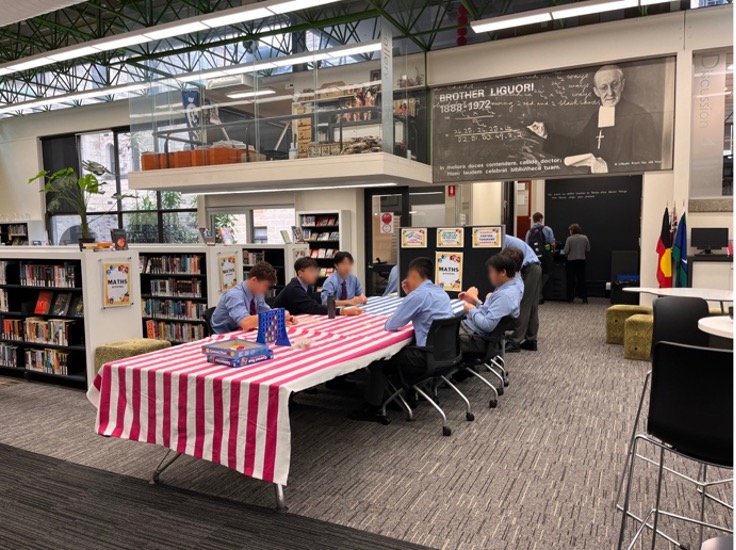
The BLRC team collected baseline data during Term One and began designing passive program activities linked to various curriculum areas. Two long tables were allocated for passive program activities and coloured tablecloths and signage were used to delineate this zone. Criteria for success was defined as:
- Increased participation in passive activities (measured through counts, observations, and photographs)
- Reduced recreational device use during breaks
- Increased positive social interaction (students working together, talking, collaborating)
- Fewer behaviour issues
- Students expressing interest or returning to ongoing activities across multiple weeks
The intervention ran over Terms 2 and 3, with each passive program introduced in a structured two‑week rotation cycle.
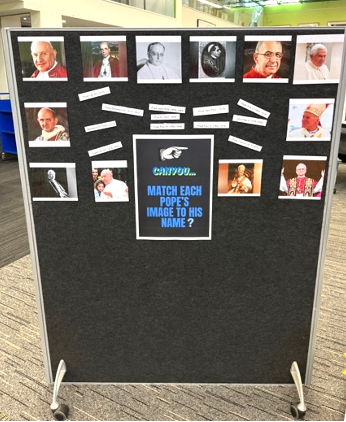
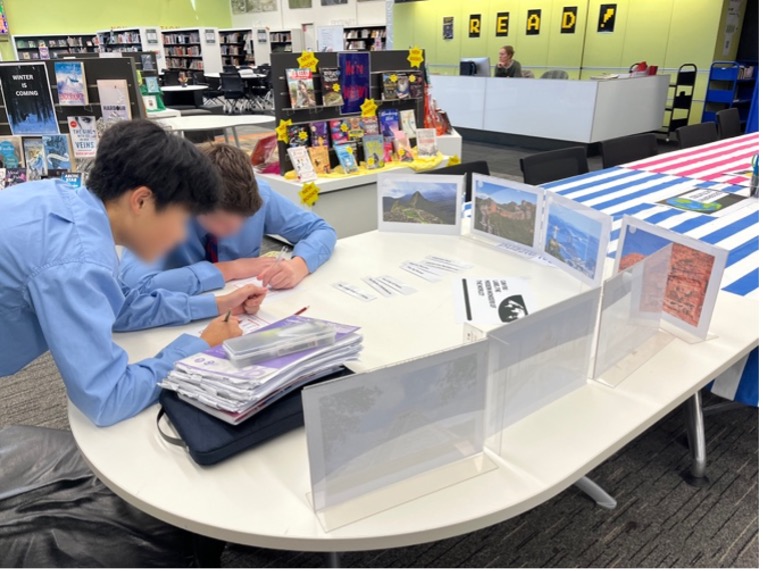
Activities were carefully planned and prepared ahead of time, and loosely aligned with various curriculum areas, but aimed at a ‘pub trivia’ level. For example, in our Geography-focused fortnight, we had students matching pictures and names of the seven modern wonders of the world. During our Religion-focused fortnight, we challenged students to correctly identify the order of the popes.
The activities ranged from puzzles to find-a-words, to more hands-on, craft activities and LEGO. As a general rule, we planned four activities for each fortnight, rotating them every few days. We also used each curriculum focus as an opportunity to showcase relevant books from the collection, to tie in with the activities.
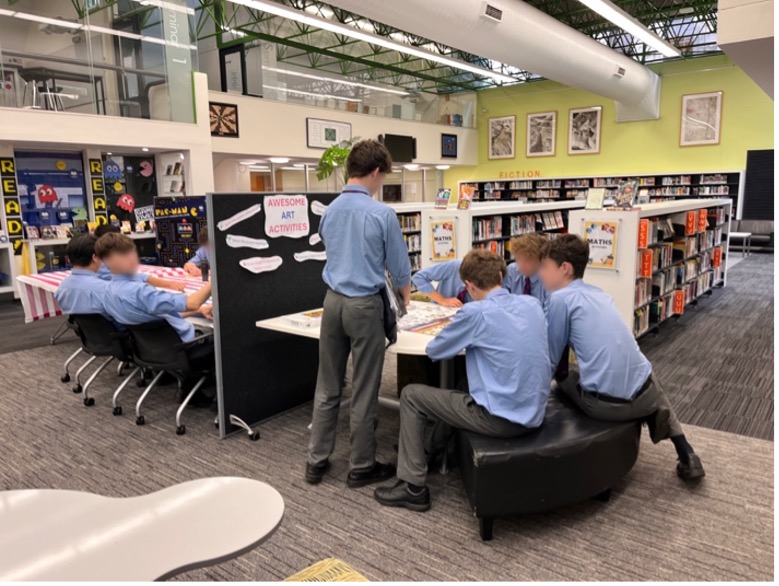
Data was collected most mornings, lunchtimes and after school, using a handheld tally counter and a clipboard. Supervisors walked around the library and counted the students engaged in study, playing chess, reading, passive programs, as well as those off task. These numbers were then collated in a spreadsheet.
The data was revealing in terms of the amount of students visiting the library every week. This is a snapshot of library usage in an average week:
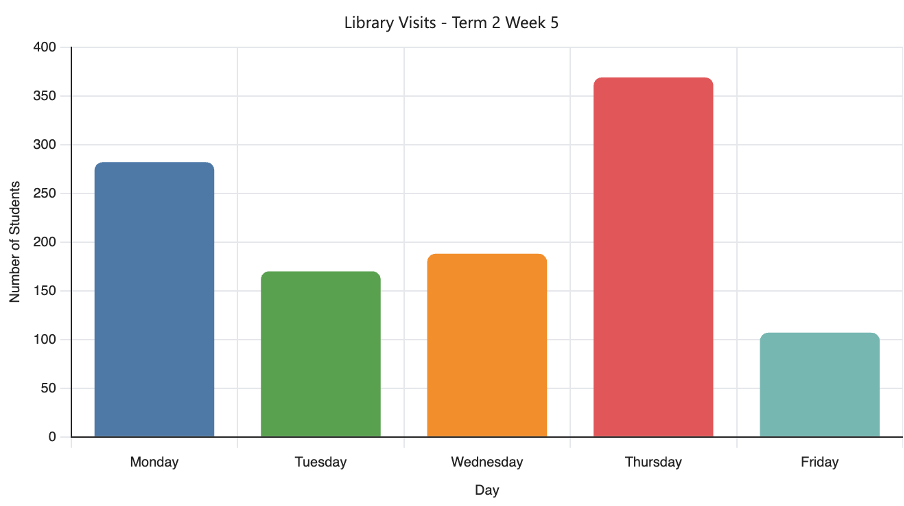
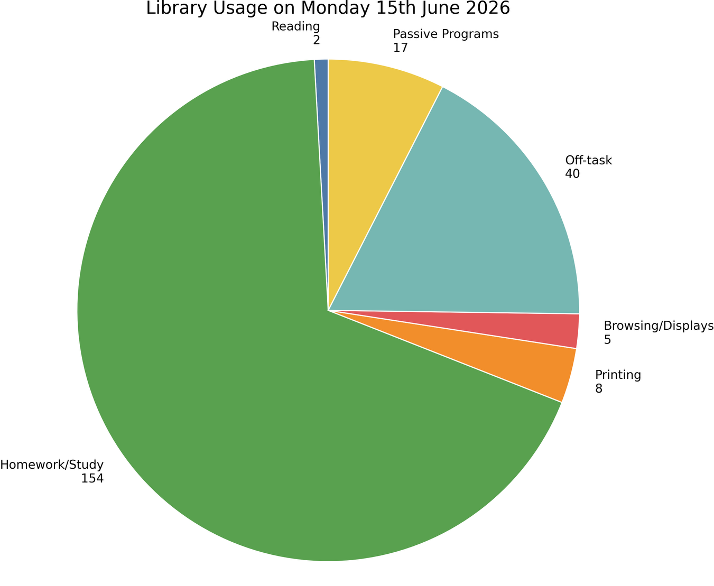
The data also demonstrates some success in redirecting students who came into the library without a task in mind. The snapshot below of library usage of a typical Monday indicates that 17 students engaged in the passive programs rather than being off task:
Observational data suggests that some of the positive benefits of passive programming might not be reflected in the immediate statistics but might instead be reflected in long-term behavioural change. Fitzpatrick (2025) suggests that through creative programming, school libraries nurture growth and social opportunities, and indeed, library staff at Joeys have witnessed increased social interactions for certain students. Similarly, in her research, Settles (2025) suggests engagement should incorporate qualitative indicators such as interaction depth, student comfort, and long-term engagement patterns. Anecdotal evidence gathered through observations suggests that:
- Students appreciated the optional, low-stakes activities in their break times.
- Students often returned to the library for subsequent activities, demonstrating a pattern of engagement.
- Puzzles are popular with teachers as well as students!Providing a combination of ‘fun’ activities like playing cards with more educational (general knowledge) activities works well.
- The break times at Joeys (maximum 20 mins at lunch time) are not long enough for craft activities.
Going forward, the library team is interested in establishing other ‘zones’ in the library space, to delineate quiet study from collaborative work. Library use statistics will continue to inform the future design of passive programs and library spaces to ensure the greatest level of library engagement, peer connection, and positive device habits.
References
Benvenuti, M., Wright, M., Naslund, J., et al. (2023). How technology use is changing adolescents’ behaviors and their social, physical, and cognitive development. Current Psychology, 42, 16466-16469. https://doi.org/10.1007/s12144-023-04254-4
Bubert, L. (2024). DIY to the rescue: 10 librarian-tested passive programs. School Library Journal. https://www.slj.com/story/DIY-to-the-rescue-10-librarian-tested-passive-programs
Efua, A. (2025). Many teens are turning to AI chatbots for friendship and emotional support. American Psychological Association. https://www.apa.org/monitor/2025/10/technology-youth-friendships
Fitzpatrick, J. (2025). Growing Teen Engagement: Strategies to Captivate Secondary Learners. American Library Association.
Holzweiss (2025). 10 Passive Programming Ideas to Get Students Thinking- Ideas & Inspiration. Ideas & Inspiration from Demco. https://ideas.demco.com/blog/10-passive-programing-ideas-to-get-students-thinking/
Merga, M. (2022). School libraries supporting literacy and wellbeing. Facet Publishing.
Settles, J. (2025). Beyond the reference desk: Using passive programming to engage students in the post-pandemic library. Florida Libraries. 67(1). https://journals.flvc.org/flalib/article/view/139296
Stoness, H. (2021). There’s nothing passive about it. Canadian School Libraries. https://journal.canadianschoollibraries.ca/theres-nothing-passive-about-it/


0 Comments