
In his memoir A pound of paper: confessions of a book addict, collector John Baxter derides libraries as ‘graveyards of good books,’ lamenting that:
Stamps are slammed on the title page, label pockets gummed to the rear pastedown, dust wrappers discarded, covers vulcanised in plastic—or, in those days, a toffee-brown buckram tough enough to withstand acid. Restoring a library book to collectable condition is like trying to return a Kentucky Fried Chicken to the state of health where it can lay an egg.
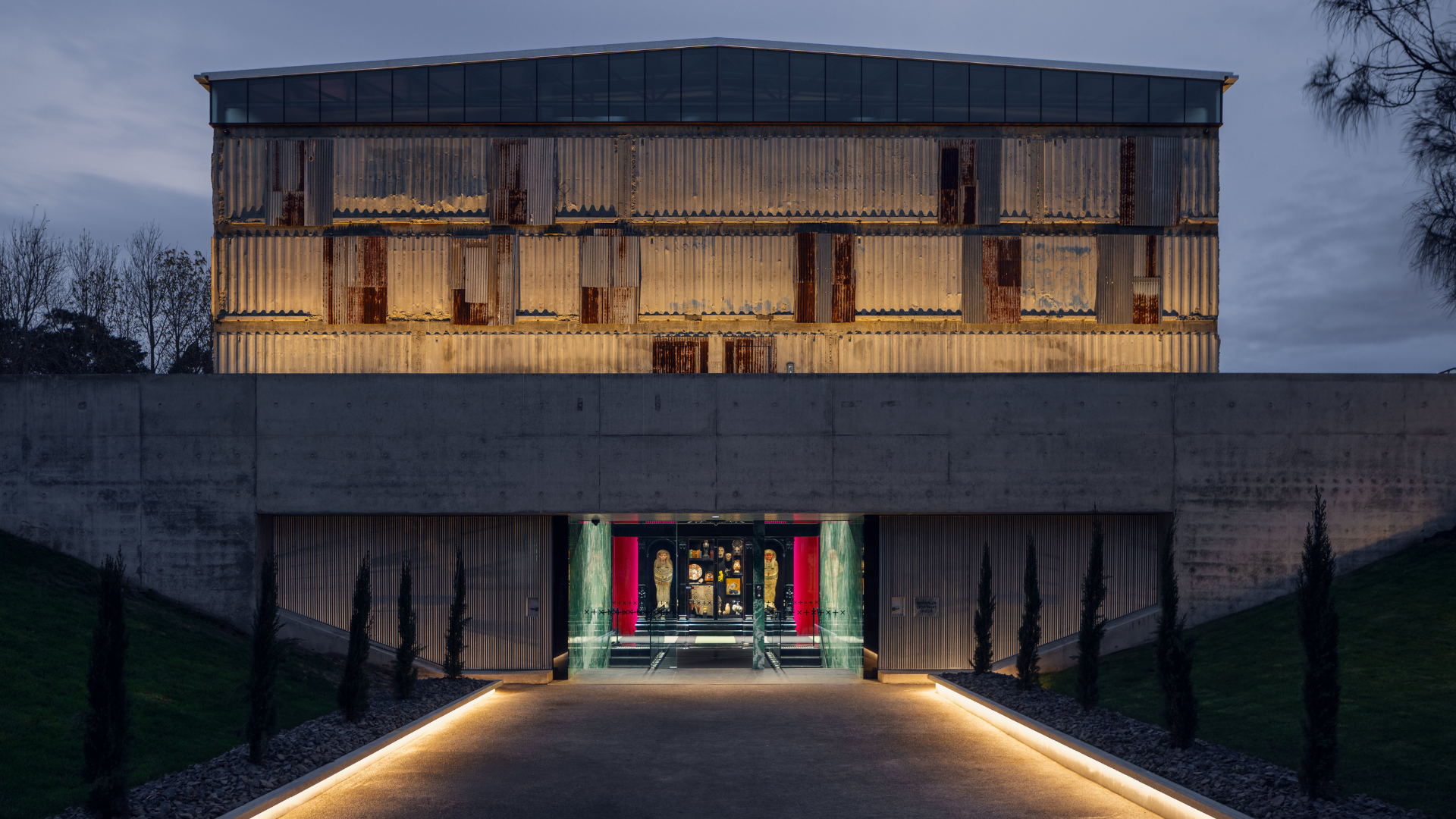
One might imagine, then, Baxter’s astonishment and delight if he were ever to visit Phrontisterion, the Museum of Old and New Art (MONA)’s new reference library. There he would find not only unblemished books, but also a discoverable collection that defies long-standing classification systems like Dewey and Library of Congress, whose obligatory labels so ruined the fruits of his addiction.
MONA has always been contemptuous of labels. David Walsh, the museum’s founder, famously shunned them in favour of The O, a geolocation app that placed all description and commentary of the art online. This technology freed the museum to organise its collection beyond traditional categories like chronology, geography, or cultural movement.
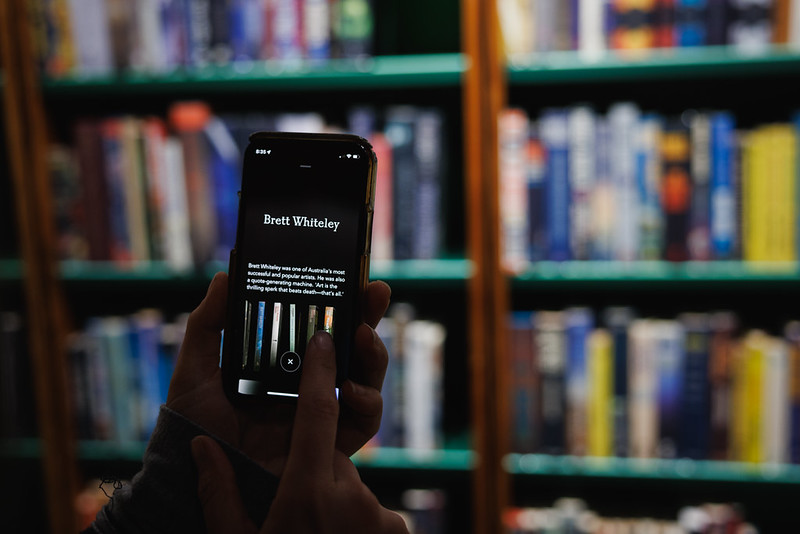
Walsh wanted the same treatment for his statement library, and in a brief to Nic Whyte—creative technologist from Art Processors, the team behind The O—he wrote:
I want a system where we can move books arbitrarily, but still know where they are. Because the order of books on shelves and in stacks is fixed, librarians aren't curators. They should be. We can, at whim, move art around to say what we like to say with art. Today we emphasise colour, tomorrow connections with Dada [art movement], or medium, or country of origin. Why can't we do this with books?
This became the defining feature of Phrontisterion: librarians with the ability to select, organise and present the collection however they chose. In short, librarians as curators.
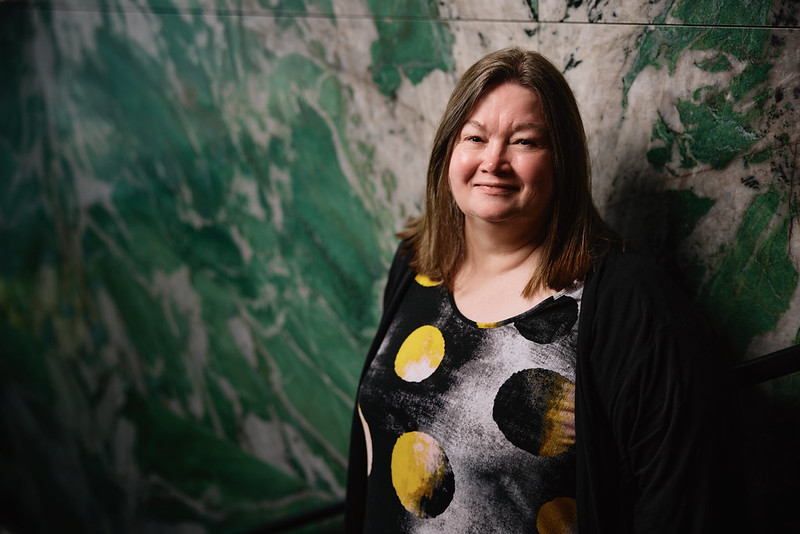
‘So this is our playground, I guess,’ says Mary Lijnzaad, Library manager at Phrontisterion.
Mary and I are standing before one of the twenty interactive shelves, or ‘live bays’, on Phrontisterion’s west wall. Directly above us, parallel to the bays and mounted on a flat truss, is a bank of projectors and cameras. Touching a book on one of these bays triggers the technology above to suffuse it with neon light, like spotlighting an actor on stage. Then, in quick succession, books that are thematically linked to the touched book are similarly illuminated, creating the effect of pattern bioluminescence radiating from a central splash.
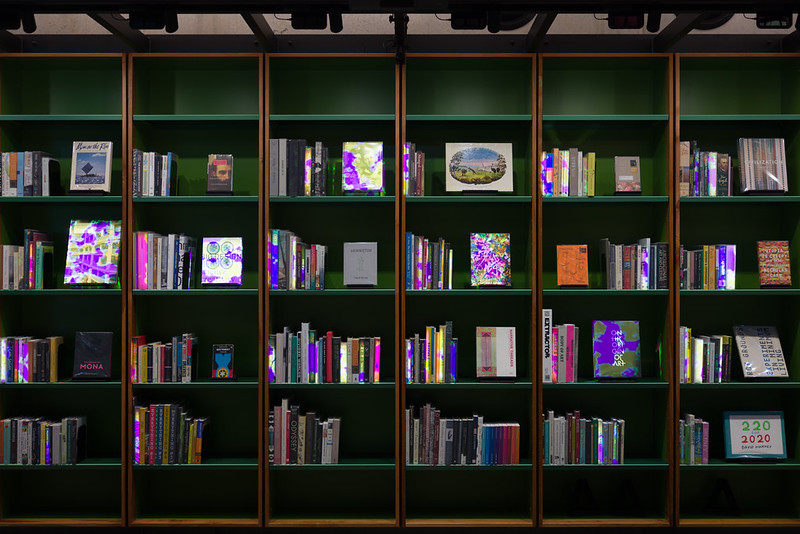
(Image Courtesy of MONA, Museum of Old and New Art)
Mary demonstrates the effect by touching Hound in the Hunt: Optical Aids in Art, a book that explores the use of optics by Old Masters.
‘So you can see,’ she says, ‘a whole bunch of Vermeer books lit up, ones looking at forgery, and anything else that’s linked in an important way. We can create tags that say, well, Hound in the Hunt would have words like Vermeer associated with it, optical aids, Caravaggio, and a few other things. We can have these sorts of broad groupings that might not necessarily conform to Library of Congress.’
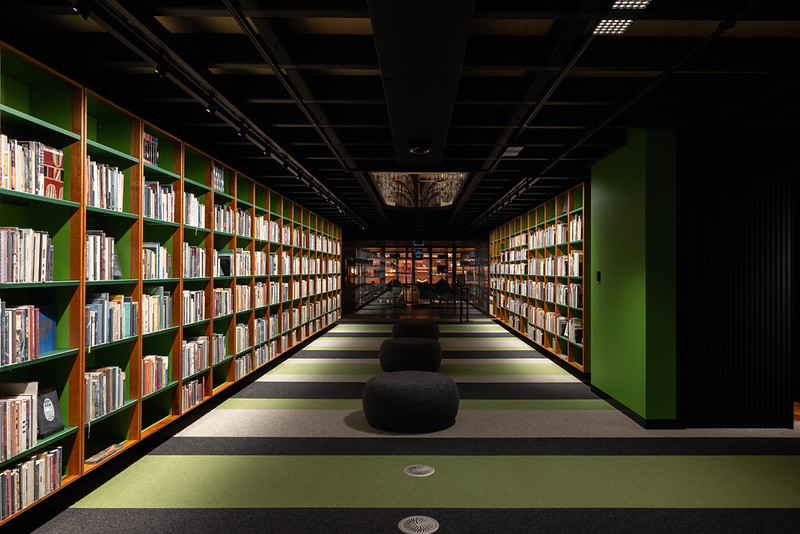
The impressive light show aside, what is most striking about the arrangement of Phrontisterion’s shelves is their dominant face-out displays and visual breaks, an aesthetic that conforms less to a library and more to a bookshop.
‘No spine labels,’ says Mary, identifying the crux of my observation. ‘We don’t have a library management system. We use a module within a museum CMS [Collections Management System]. The whole CMS that we’re using in production of this knows what every spine and cover of every book looks like.’
Nic Whyte, in his essay A library without Dewey, further illuminates the workings of this technology:
If we know what a book’s cover and spine look like, we can photograph a shelf and work out where every book on it is. No chips, no tags, no barcodes on the spines. A camera, and a system that learns the collection … Photograph a shelf of uncatalogued books and the system identifies them, draws their details from external catalogues and creates the records.
‘What we do is we use an app called Pulse,’ Mary says, taking out her phone and putting on her glasses. ‘And it will give us a statistic: we’ve got sixteen-hundred odd healthy shelves, we’ve got thirty-six shelves that haven’t had a photo taken of them in a while … So once you take the photo, it’ll just say, well, we’ve updated things so that you know what books are actually there now.’
The advantages of this system of spatio-temporal cataloguing extend beyond staff time saved in traditional cataloguing, accurate shelving, and shelf-reading. They also benefit the patron.
‘We did a trial going without Dewey in our old library,’ Mary says. ‘Taking the spine labels off made the books more approachable, made them so that people felt, I guess, that they could touch them because they were just a bunch of books. A lot of people are frightened when they take a book off [the shelf], that they're not putting it back in the exactly right space … With that fear removed, we just had so many more people interacting with the books and picking them up and taking them and reading them. We had a lot more shelving to do at the end of the day, but it was a really good insight into how removing spine labels might impact on reader behaviour.’
I ask Mary how this spirit of accommodation fits with MONA’s ethos of confrontation and disorientation.
‘I guess we're the counterbalance,’ she says. ‘We're meant to be a calm, quiet space that people can walk through and come and sit and read. And when you're in the museum, The O is all pink, but when you walk into the library, your pink O turns into a green one. So that changes from the way The O describes artworks to essentially what is our catalogue. Everything that is on shelf here is now in your hands as well as being actually in front of you.’
Mary leads me away from the live bays, past a cabinet filled with Egyptian sarcophagi and various death masks, until we stop beside an enormous, steampunk-Burtonesque iron spiral staircase that gives the impression of being half submerged beneath the carpet.
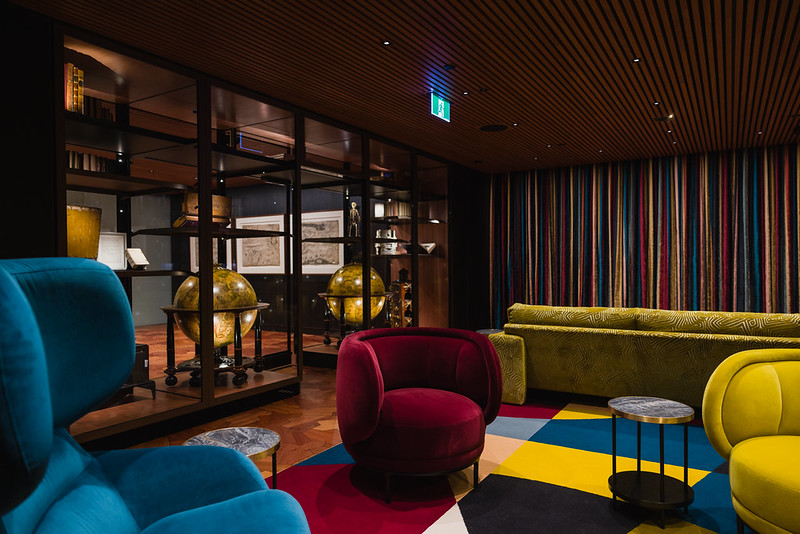
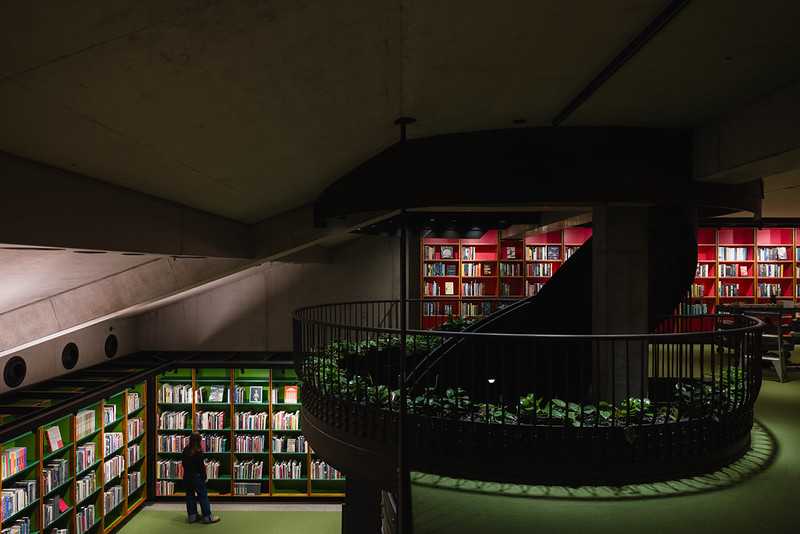
We are standing before a seemingly traditional bay of shelves, but, in true MONA fashion, the initial impression of conventionalism is illusory; the bay is a patchwork of delineated colours.
‘David said to Art Processors,’ explains Mary, ‘if the librarians come in and they want to shelve all the green books together, they should be able to do that. So here, as a little homage to that theory, we shelved this zone of sex and death according to the colour of their spines. It’s an old decorator trick.’
This decorator’s trick is a simple but illustrative example of the flexibility of Phrontisterion’s cataloguing system, one that offers seemingly limitless organisational possibilities.
As Walsh explains on MONA’s website:
A book about Mars should be near a book about Mercury if we're talking planets. But if the book is also about Roman mythology, we'd be browsing mythology, and we'd not find what we were looking for. Dewey assumes a book is about one thing and belongs in one spot. Real collections, and real curiosity, don't work that way.
Mary offers her own example: ‘A really interesting one to me was [the subject heading] “Artists’ wives”. What about artists' husbands? Library of Congress has done bucket loads of work to update a lot of those ones, but that's the sort of tradition that LOC and Dewey are born out of—that historical, religious, Western, patriarchal system.’
‘Whereas this,’ Mary says, gesturing to the shelves, ‘we aren’t condemning [a book] to a life in one shelf spot. We can move it around.’
Mary invites me to view the remainder of the library, and while other wonders abound—digital wayfinding of items, a copy of Shakespeare’s first folio (1623), cabinets of rare curiosities inside nouveau-Victorian parlours where Mary remarks, ‘I'd like to get a stuffed alligator on the wall in here’—for the author, nothing surpasses the sight of library books without spine labels.
Phrontisterion has at last overcome Baxter’s lament: liberating library books from their defacing dressing. Simultaneously it has emancipated them from their strict, antiquated formations, with Walsh even going so far as to invite visitors to simply ‘leave them on a random shelf after having a read.’ With great respect to Dewey and the Library of Congress, it’s a joy to see library books, after more than a century of civilised captivity, return to an au naturel lifestyle, once again free to roam naked about the shelves.
References
Baxter, J. (2003). A Pound of Paper: Confessions of a Book Addict. St. Martin’s Press.
Lijnzaad, M. Personal communication, June 26, 2026.
Museum of Old and New Art. (2026). Phrontisterion | The O. Museum of Old and New Art. https://mona.net.au/other-stuff/phrontisterion#the-o
Walsh, D. (2026). Phrontisterion | David. Museum of Old and New Art. https://mona.net.au/other-stuff/phrontisterion#playing-the-library-card
Whyte, N. (2026, June 20). A library without Dewey. Art Processors. https://artprocessors.net/library-without-dewey



0 Comments