
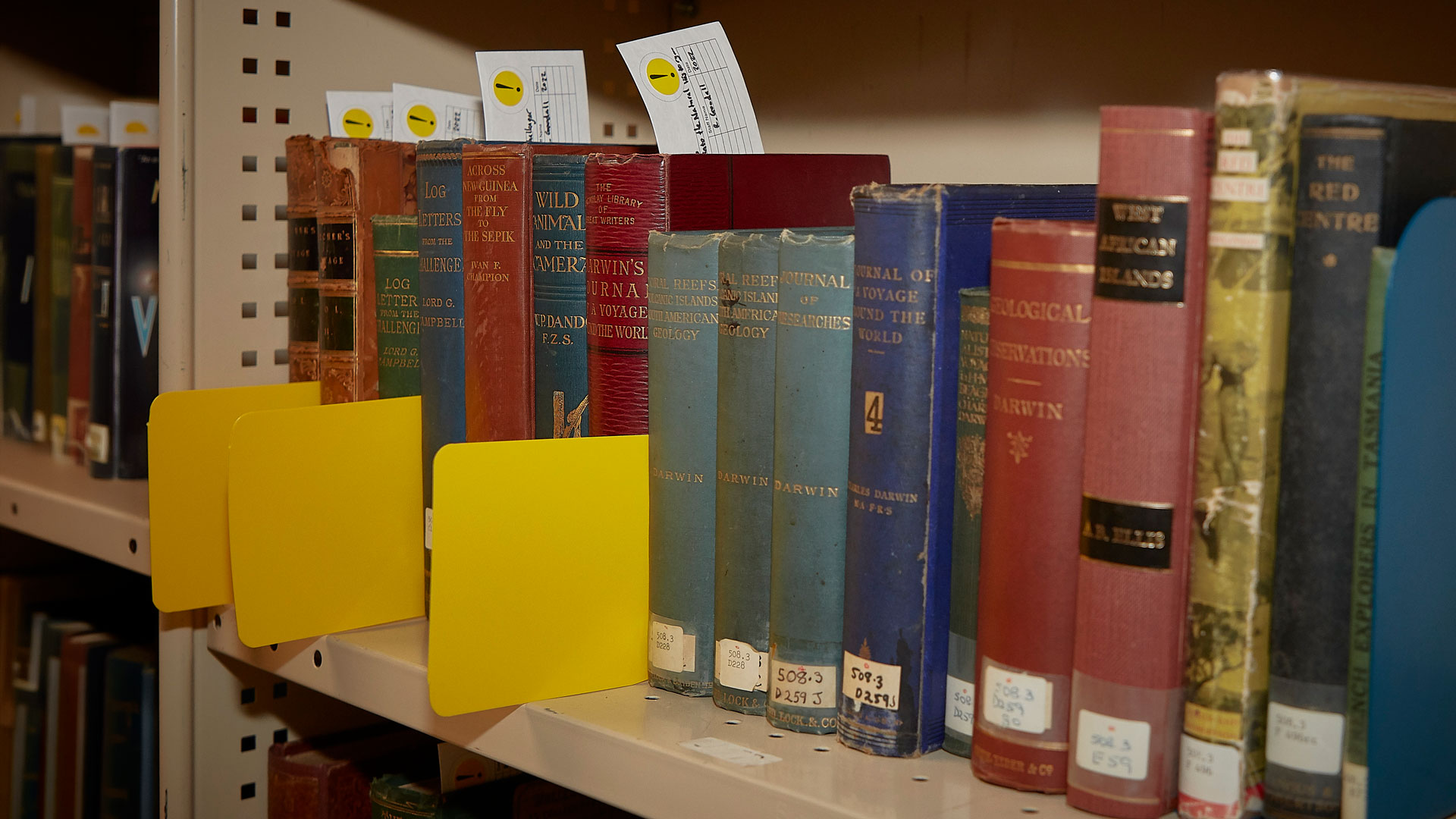
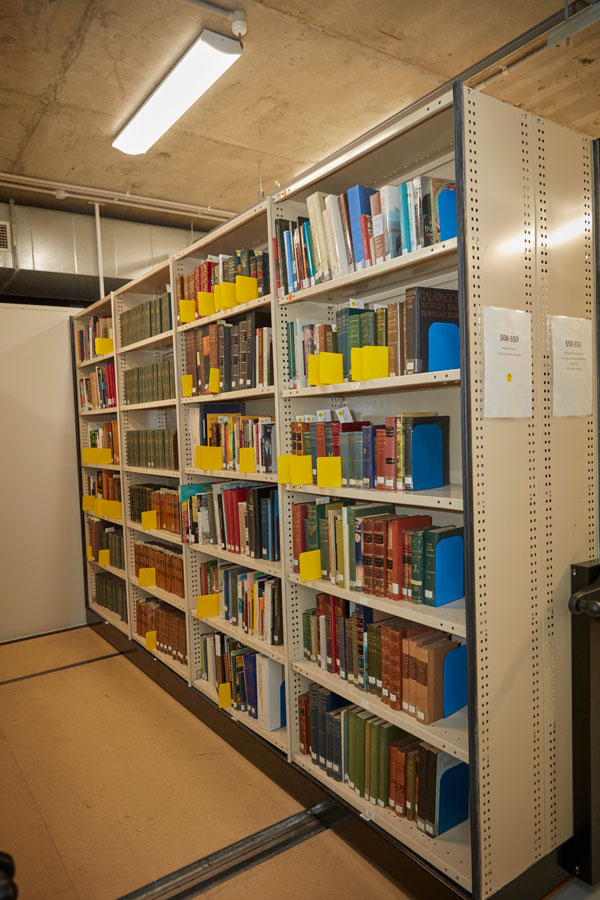
As anyone working with historic book collections will know, they require specialised care and throw the odd collection management curve ball. An emerging health and safety issue for historic libraries that I have been working on in recent years is the identification and management of hazardous substances in old book bindings. As the book trade industrialised in the early 19th century, new styles of binding developed using materials such as book cloth instead of traditional leather coverings. Vibrant shades of book cloth used pigments containing heavy metals, and these linger in our collections with some collection management implications to be aware of.
At Museums Victoria Library we started testing our books for hazardous substances in 2020. Working in a museum library has its advantages; when I heard about some ground-breaking new research about arsenic in green cloth-covered 19th century books from the Poison Book Project, I was able to consult our Conservation team, who are experienced in identifying and managing hazards in collections. I was in the fortunate position to establish a project to test the library collection and join our organisation’s working group for managing hazardous substances.
Inspired by the Poison Book Project, we started searching for the vibrant green book covers that can contain arsenic if dyed with two popular 19th century shades: Emerald green or Schele’s green. While we didn’t find many examples of the classic variety described by the Poison Book Project, we did find heavy metals in book covers in our library.
Our Materials Scientist used an XRF instrument to identify the heavy metals and gave them a rating from trace to high. Based on our early findings, we decided to test all pre-1900 cloth-covered books. We tested for a range of heavy metals, including arsenic, mercury and lead. Generally, the levels found in our collection were at the lower end, and we have restricted access to items with worrying levels of substances such as arsenic and mercury.
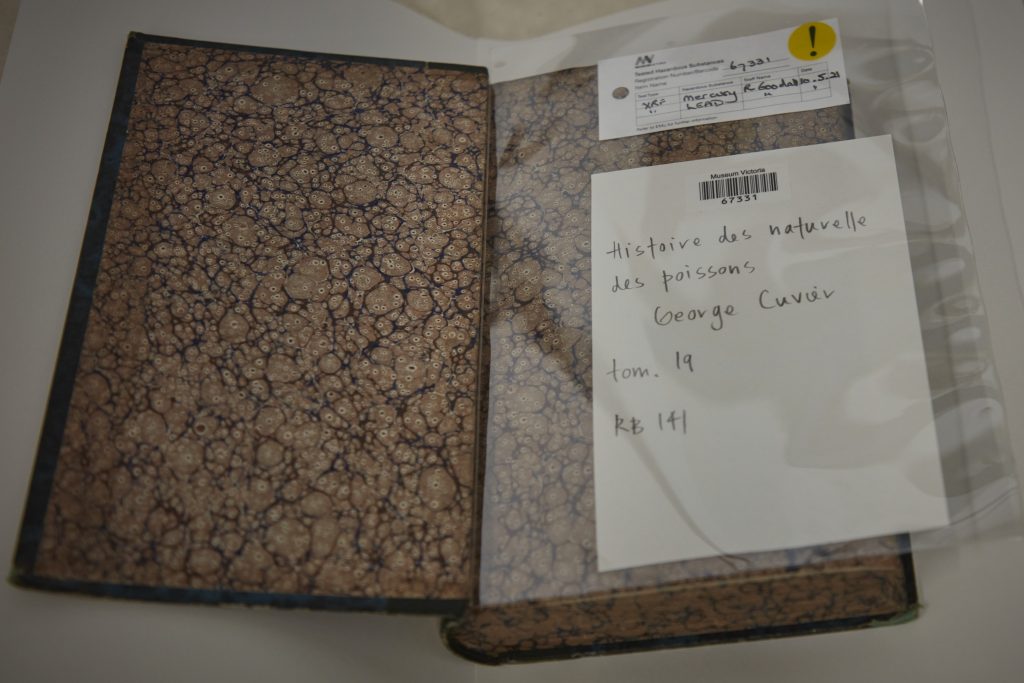
Following our research, we adjusted handling procedures and implemented new signage to improve awareness and handling of materials with hazardous substances. We have updated electronic catalogue records for affected items with a generic warning to alert library staff and users before they reach the shelves. There are three levels of physical signage, including at the entrance to our stores, on shelving units with affected items, and item level tags. We already wore nitrile gloves to handle our Rare Book Collection, and since our research project we have implemented additional Personal Protective Equipment (PPE), now wearing gloves when undertaking activities such as shelving or a collection move, since we don’t know which items in the collection we might end up handling. All library staff and volunteers complete a Working with Hazardous Substances in Collections training unit to foster awareness and support safe handling.
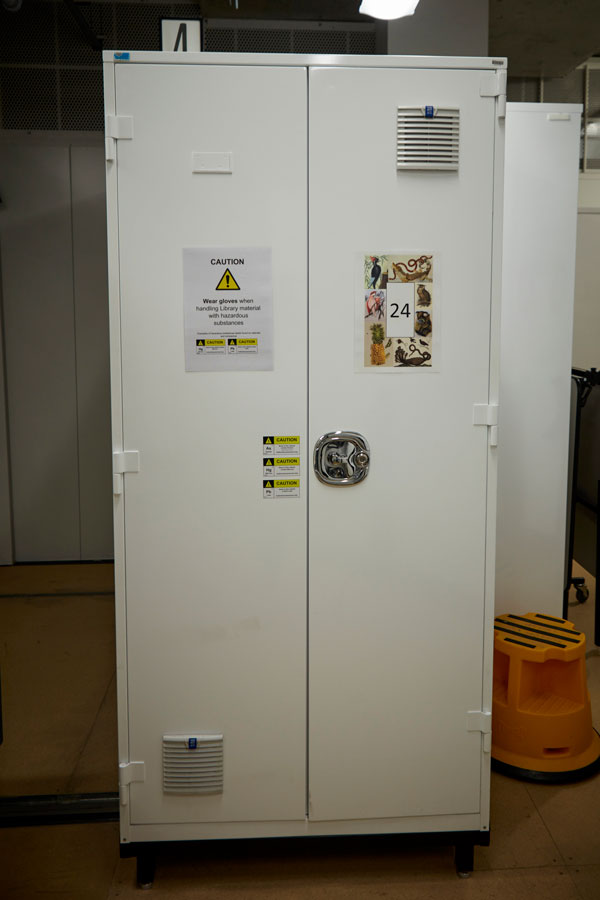
While identifying hazards in library collections is an emerging trend for heritage collections, it’s important to note that in many cases, the risk is low for casual handling of books. It is more likely to be an issue if you do intensive work with historic books, where there is damage to an item that would cause the pigments to shed, or if an item is wet. Some common preventative strategies to employ if you are unable to test include wearing gloves and washing your hands thoroughly after working with suspected items.
Since we started testing, the study of hazardous substances in libraries has gained steam, with numerous libraries around the world conducting their own studies. This interest has culminated in a special issue on bibliotoxicology in the Studies in Conservation journal, published in November 2025, that includes our research at Museums Victoria.
While the risks surrounding heavy metals in library collections are generally quite low, it is advisable for librarians working with historic collections to cultivate some awareness of this issue with respect to their own collection and decide if further action is required.
Further reading: Goodall, R., & Webster, H. (2025). Showing our Metal: Identifying and Managing Hazardous Substances in Book Covers in the Museums Victoria Library. Studies in Conservation, 70(7–8), 762–771. https://doi.org/10.1080/00393630.2025.2490884

0 Comments