
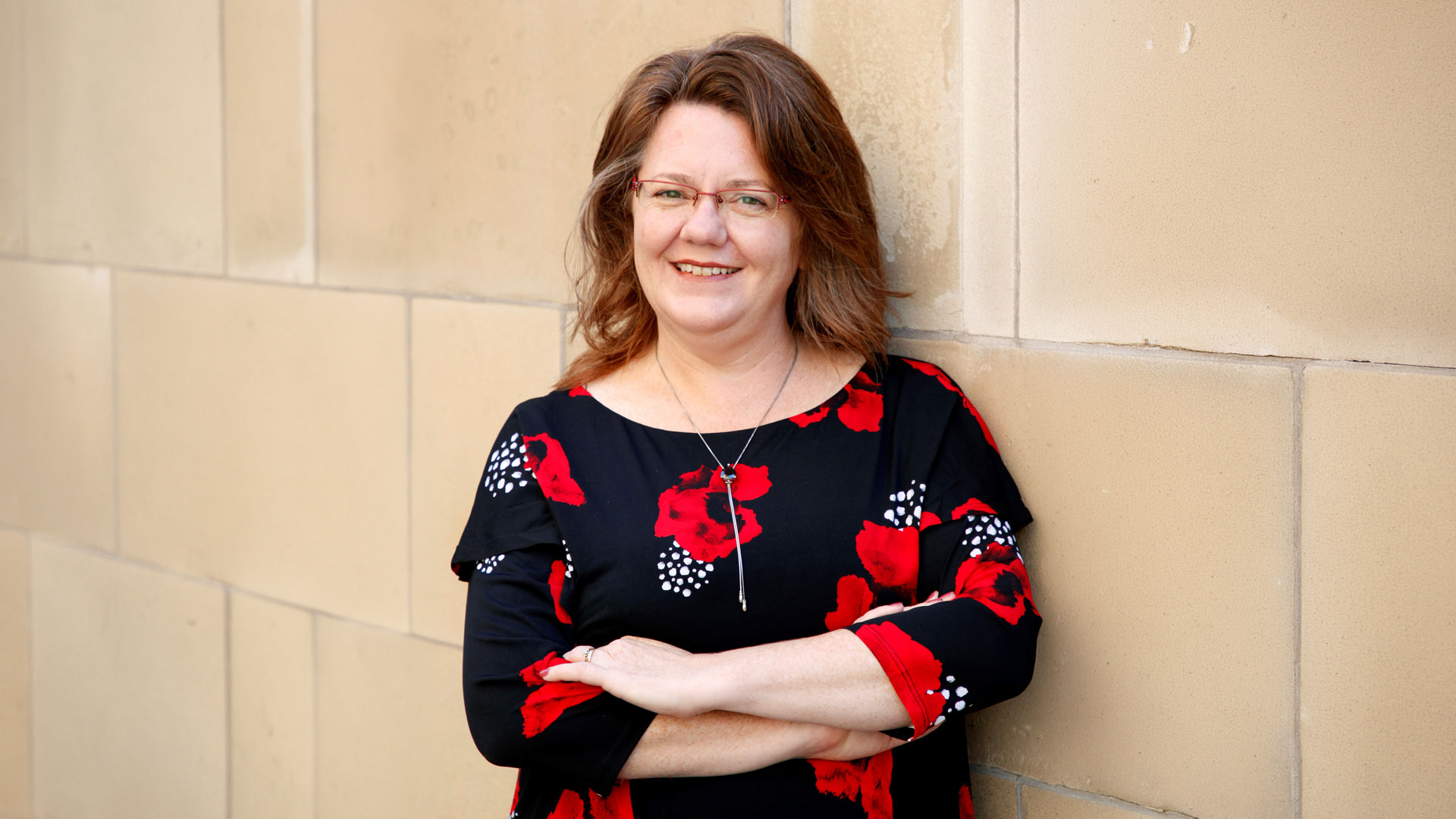
In this edition of Library Stories, we hear from Laurie Atkinson, Director, Law Library of Victoria and Supreme Court Librarian. Laurie talks to us about how she found her way into LIS, her time in government and law libraries, her approach to leadership and much more.
Hi Laurie! Thank you for speaking with INCITE. Firstly, could you tell us a bit about how you found your way into the library and information services sector?
When I was coming to the end of my arts degree studying literature and history, I got a job shelving books in the university library. One morning the university librarian pulled me aside and said you know I think you really would enjoy working in a library as a career. He recommended the RMIT school of information management, and so I arranged to move from Queensland to Melbourne and enrolled at RMIT and immediately got a job at RMIT libraries and made firm and lifelong friends in my first week of work – that set me up very well for a career in libraries.
I worked at RMIT library for four years and the towards the end of the fifth year I left the profession for a couple of years to concentrate on being a Mum. My next job was as the coordinator of the Collingwood toy library, which was as much fun as it sounds. From there I worked in public libraries at Boroondara in Melbourne, and then found my way into special libraries firstly at Vicroads in the Business Information Centre and then at the Department of Treasury and Finance in Victoria to establish the Victorian government library service. Right now I'm working at the Law Library of Victoria based at the Supreme Court of Victoria.
You’ve held a number of senior roles in government, law and special libraries including Manager of the Victorian Government Library Service and now Director Law Library of Victoria and Supreme Court Librarian. What is it about this kind of work, and these types of libraries, that appeals to you and what is one thing about them that you would like people to know (that they may not know already?)
For around about 20 years now I have been the most senior technical specialist and leader of the library or information service that I work in. One of the things that I enjoy about this type of role is that I continue to work in libraries and so that means working with librarians who I really think are some of the most intelligent, compassionate, thoughtful and resourceful people in all the world. I love working with librarians, but I also get to then advocate for those people to make sure that the service is well resourced, and importantly to sell the services to people who otherwise may not understand exactly what it is that the library service can provide for them.
This has been a great joy for me at the Law Library of Victoria which in my time here in the past 10 years, we have extended the services so substantially from a largely localised print based collection and services to an open, accessible, digital resource providing high quality legal information to lawyers and judges from anywhere that they might be practising or working in the state of Victoria.
One thing that that might come as a surprise to other librarians is the role that our library plays in the distribution of Victorian case law to publishers. Most people, particularly anyone working in libraries, is likely to be aware of the resource AustLII which contains decisions from all courts around the country. Well, the Victorian decisions get into AustLII via our library. The judges provide the decisions to the library and the library shoots them off to AustLII (and other publishers) making sure that they are machine readable and can effectively land in databases for the purpose of discovery and use.
You have a great deal of experience in leadership, staff development and change management. In your view, what makes a good leader and do you have a particular management style or ethos?
Somebody once described my approach to change management as effortless and I think this comment stayed with me because anybody who has been involved in managing change knows that a lot of effort goes into it. But I would find it much more effort if what I had to do was simply stay still. I've always seen the change that I've led to be a natural evolution with its own momentum that I'm lucky to be a part of.
I really enjoy working with people. I feel such a lot of warmth and pride in the people that I get to work with. I am in awe of their talent and skills and I respect them all very, very much. The highlights of my career have been those moments, and I've been fortunate to have this happen to me on a number of occasions, where a family member of a staff member or a former staff member have sought me out - if they've seen that I'm appearing in a speaking gig or somewhere where they might be able to come and speak to me - and thank me for the impact that I have had on their loved one, and for the concern that I demonstrate for my team members as whole people, with loving families that need to be their highest priority.
It’s such a cliche really but what I think makes a good leader? You gotta listen to people and you gotta always be learning. Pack your bag full of humility because you might be the leader but that doesn’t mean that you’ve got all the answers.
You were previously Chair of the Trove Strategic Advisory Committee and continue to serve on that Committee – can you tell us about the work you’ve been undertaking?
Earlier this year I stood down as chair of the trove strategic advisory committee (TSAC) though I continue to serve on that committee. I was chair for four years and enjoyed working with the National Library team so very much in that role. TSAC meet a number of times a year and work as a sounding board for the National Library team, particularly Trove consultative services group to explore ideas, to test hypothesis, to challenge assumptions, and to serve as a conduit of communication where that is helpful. One of the things that I enjoy most about this work is the opportunity to sit in a room with some real industry leaders and tease out ideas at the cutting edge of information management and the role of a national collecting institution on the scale of the National Library.
What is one of the biggest challenges facing library and information services over the next 10 years?
Such an interesting question to contemplate the biggest challenges facing library and Information Services over the next 10 years. I think there are some challenges that are enduring since the dawn of time really and that will continue, specifically equitable access to sources of information and stories to all members of the community. The way in which that particular challenge manifests in this era and in different places in the world is of course different. My mind is drawn to those who would seek to limit individual access to pieces of information and stories. I so admire the public librarians of our country that continue to preserve the right of access to all members of the community to our library collections.
In my area of law my focus is the rise of innovative technical tools that look to re structure and re purpose what we are accustomed to in traditional database tools. Our role as librarians is more critical than ever as we explore, evaluate, and implement new tools.
Finally, on a lighter note (!), what is one thing you’ve read or watched this year that you would recommend to our readers?
I’ve been addicted to Rick Steves videos on travelling in Europe. He has such great tips for what to see and how to get around [note, I’m just back from a long holiday in the northern hemisphere.] I particularly enjoy how much Rick tries to convince Americans that they should use public transport in Europe. I agree with him! Highly recommend to anyone who is planning travel.

0 Comments