
Introduction
New technologies, evolving client behaviours, and changing information practices continue to redefine the role of libraries. Library and information professionals must seek to expand their skills and knowledge to deliver high-quality services that meet the developing needs of clients and communities (Australian Library and Information Association [ALIA], 2025). Professional development (PD) helps library staff to maintain pace with emerging trends, practices, and tools within the sector (Moonasar, 2024).
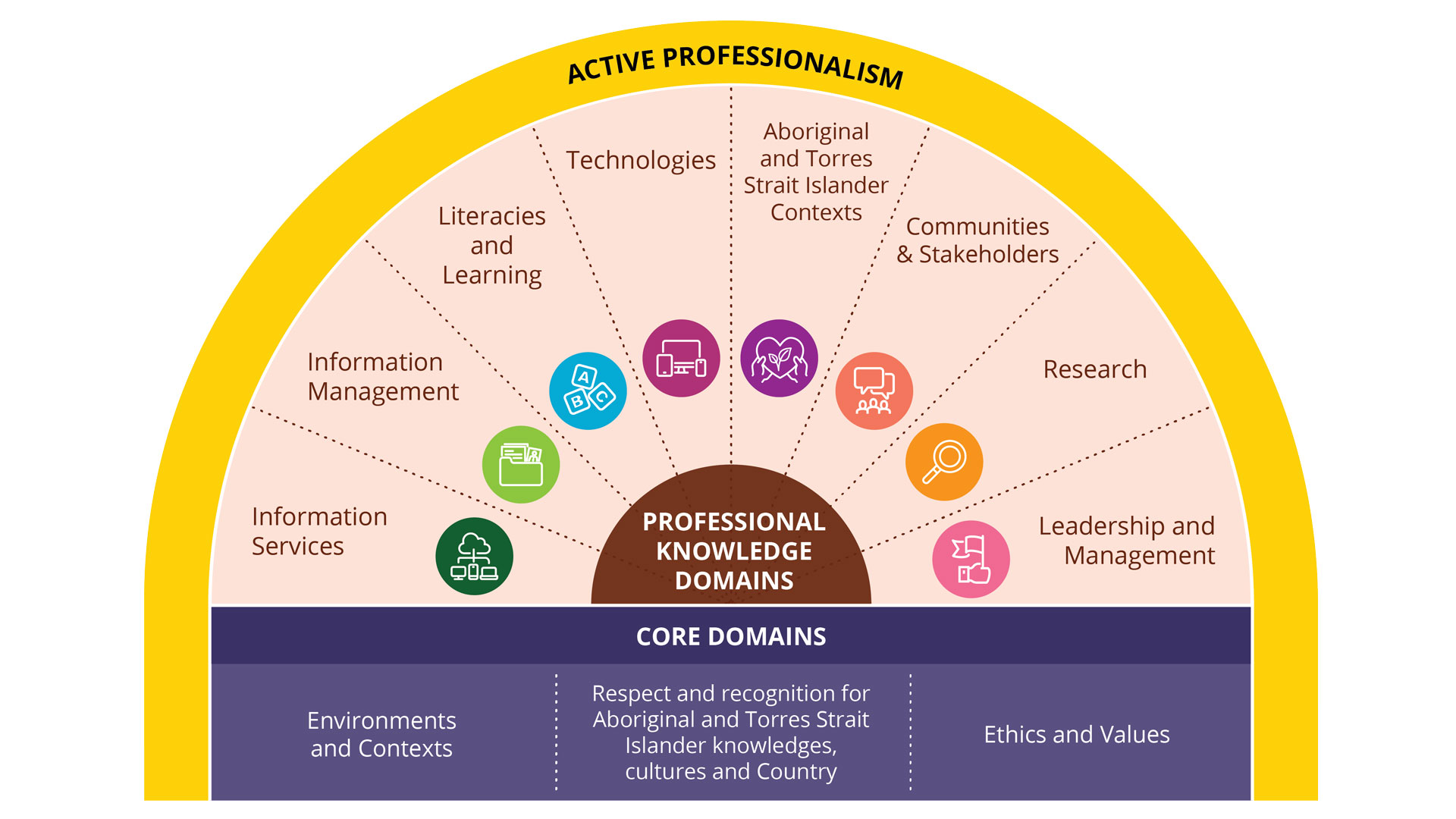
The ALIA Framework of Skills, Knowledge and Ethics for the Library and Information Services Workforce (the Framework), provides the basis for the expertise required in contemporary library and information services (ALIA, 2025). The Framework comprises three elements, Core Domains, Professional Knowledge Domains and Active Professionalism (ALIA, 2025).
This article describes a practical and scalable approach to PD that uses the Framework as a foundation while remaining responsive and adaptive to staff needs. It outlines how libraries can translate the Framework into an actionable PD program that encourages participation, supports shared learning, and builds staff capability in a dynamic, practice‑focused environment.
Rationale
Academic libraries are facing increasing obstacles, particularly around funding and emerging technologies such as AI and their impact on higher education. With these challenges and rising workloads, staff have limited time to identify areas for further development.
To address this, the Queensland University of Technology Library (QUT Library) created a Framework-led PD program, ensuring alignment with nationally recognised competencies and standards. The program was developed to be sustainable, whilst building on and complementing the library’s existing PD initiatives.
Program Development
Program development commenced with the formation of a small task team to design and deliver a 6-month pilot program. We chose to focus on the Professional Knowledge Domains (PK Domains) that are foundational to our library staff and specify clear knowledge areas that align with QUT Library’s current services.
Building on previous work mapping QUT Library operations to the Framework, the team identified potential skills gaps. Developing this further, we engaged with library staff through a survey asking them to rank the PK Domains by level of interest and their preferred method of delivery. This enabled us to prioritise domains and delivery formats, based on identified gaps and staff feedback.
Analysis of the results established interest in PD across all PK Domains. Due to the timeframe for the pilot, the team decided to focus on three PK Domains in 2025: Information services, Leadership and management, and Literacies and learning.
Implementation
The team devised a blended approach to PD consisting of themed emails and workshops. This provided multiple opportunities for staff, across diverse roles and locations, to meaningfully participate in the program.
We dedicated a month to each PK Domain, which consisted of four to five emails and a workshop. Emails were sent at the beginning of the week, focusing on a specific topic within the domain. They were structured to have a brief introduction to the topic, a resource to read with some reflective questions, other short individual activities or case studies, and further resources to engage with. We tried to use examples/resources from within the library or QUT where possible.
Two of the three workshops were designed and delivered in partnership with university staff from outside the library, with the third being led by internal staff. The team provided Framework-aligned learning objectives to collaborators with direction to create interactive sessions.
For example, during the Literacies and learning month, Dr Lauren Woodlands from QUT Academy of Learning and Teaching (QALT), with expertise in online teaching, delivered a workshop titled “Using technology to enhance your teaching” that focused on evidencing theory through practice to:
- Explore contemporary teaching and learning approaches relevant to library professionals.
- Discuss practical ways to integrate technology into instructional design and delivery.
- Plan how to modify current activities and practices to include technology.
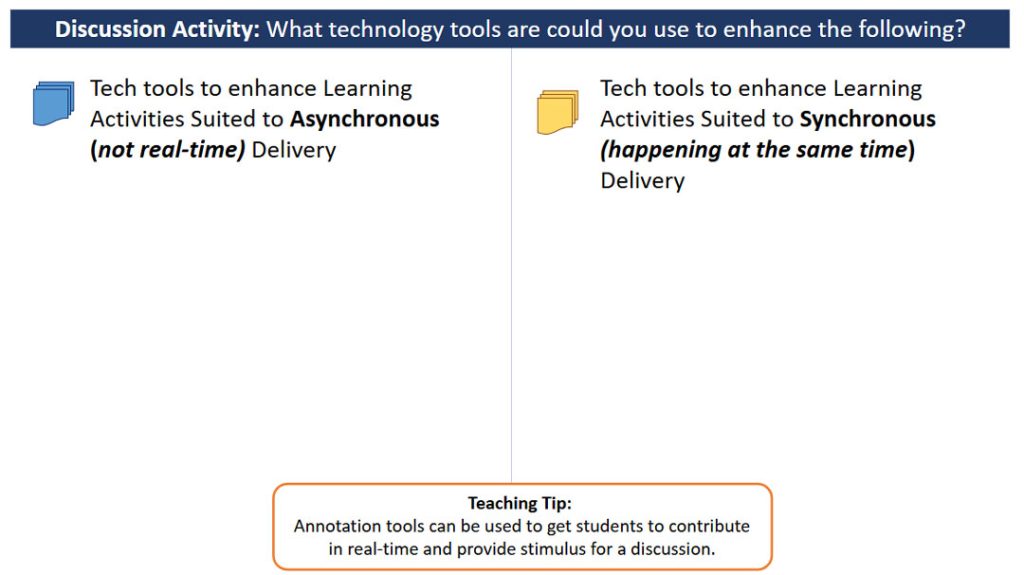
Using an active learning approach, Dr Woodlands modelled the core principles of student-centred learning theory. Building on the domain focus of technology-enhanced learning, she showcased relevant tools and technologies. Participants then engaged in hands-on exercises including polls, annotation, and collaborative whiteboarding to understand and apply the tools and concepts in real-world teaching scenarios (see image 1).
Feedback and Future Directions
Evaluation data indicated that staff feedback on the pilot program was highly positive, and was drawn from a formal survey, direct email responses, and informal conversations with the task team. Staff consistently identified the renewed focus on PD as a key strength, particularly valuing opportunities to learn from experts in the university. The program was also recognised for effectively showcasing high-quality practice across the library.
While feedback was gathered on the pilot, there was no assessment of capabilities before delivering the content. In the future we hope to capture pre- and post-test scores on skills and knowledge development.
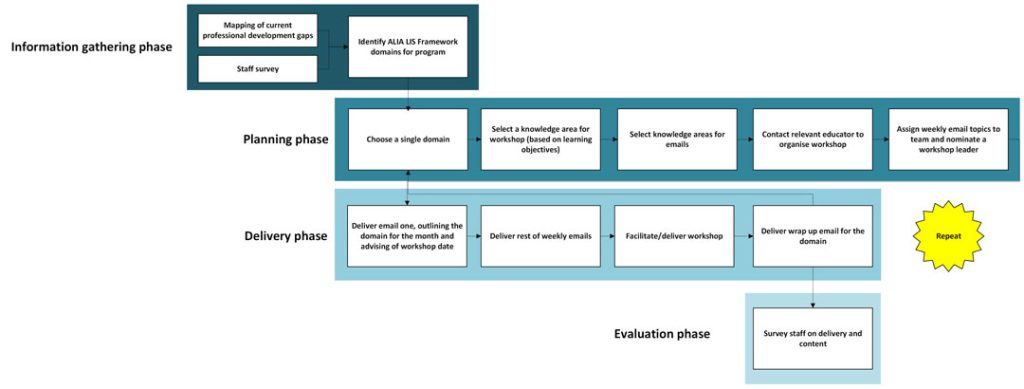
At the end of the pilot program, we documented our process in a workflow (see Figure 1). We plan to build upon this process over the next iteration of the program.
With the support of our University Librarian, the program will continue through 2026. During this time, we will be exploring other domains from the Framework that staff expressed interest in. We plan to review the method of delivery to determine whether alternative tools for sharing resources and questions could enhance engagement and create more space for discussion. The team will explore opportunities to collaborate with, and utilise expertise from, teams across the library in the development of the ongoing program.
Conclusion
This pilot demonstrates how the Framework supported QUT Library to develop a PD program that meets staff needs. The approach outlined offers a practical roadmap for other libraries seeking to develop sustainable, Framework-aligned PD.
At QUT Library, this program is expected to strengthen staff confidence and capability and consequently enhance service delivery. We hope this article will be valuable to library and information professionals committed to PD and will encourage others to consider implementing similar initiatives within their own institutions.
References
Australian Library and Information Association. (2025). ALIA Skills, Knowledge and Ethics Framework for the Library and Information Services Workforce. Retrieved December 23, 2025 from https://www.alia.org.au/Web/Web/Careers/LIS-Framework-Pathways-Project/LIS-Workforce-Framework.aspx
Moonasar, A. (2024). Continuing professional development and the changing landscape of academic libraries. Library Management, 45(3/4), 226-242. https://doi.org.10.1108/LM-09-2023-0100

0 Comments