
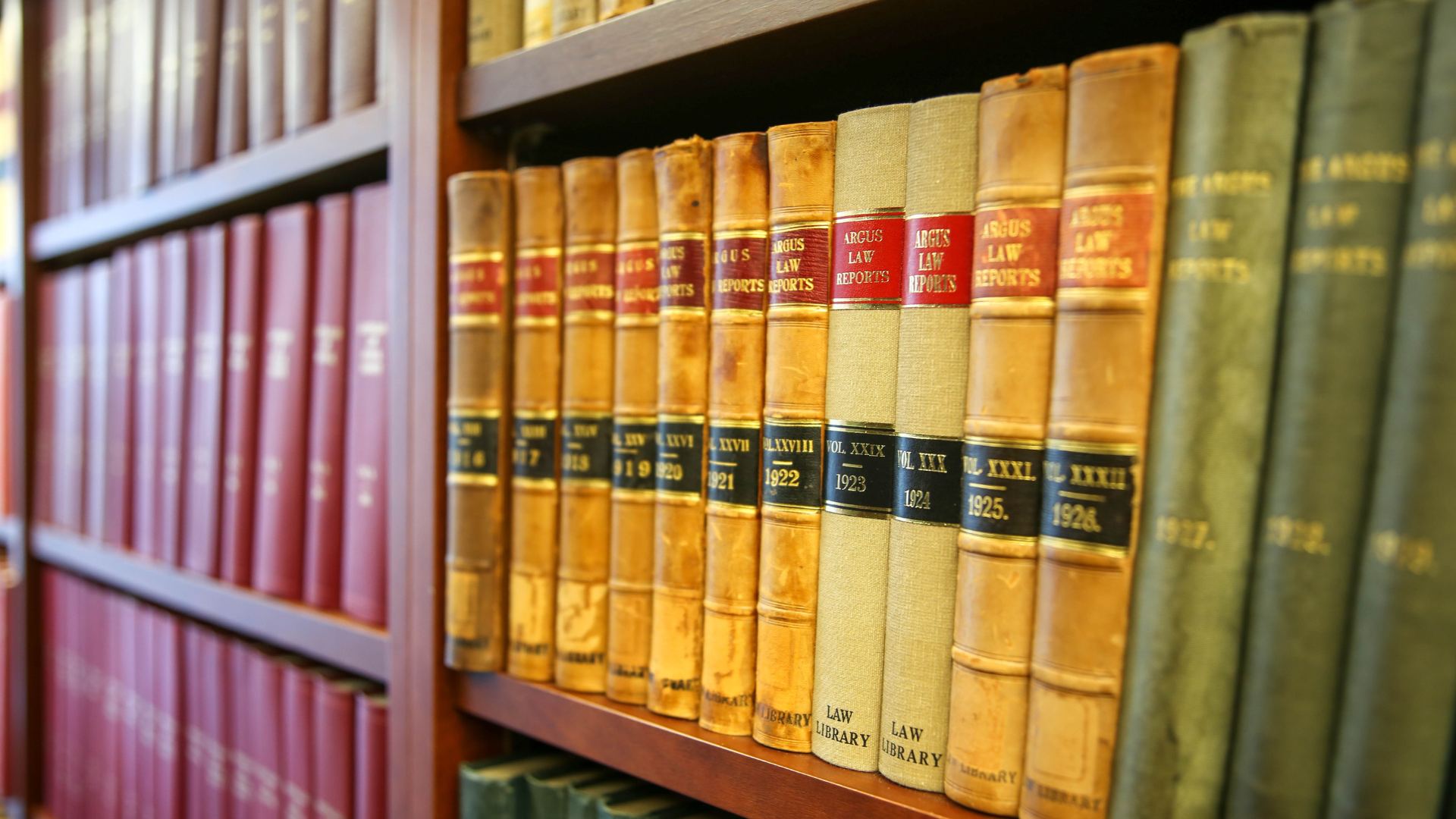
The Law Library of Western Australia, located in the David Malcolm Justice Centre in the Perth CBD, is the result of an amalgamation of the former Crown Law Library and the Supreme Court Library.
The Library provides services to members of the Judiciary and courts, legal officers of the State, and the broader WA legal profession. It is funded by the Department of Justice, with a contribution from the WA legal profession derived from annual practising certificate fees.
The history of the law library began with the Law and Parliamentary Library Act 1873. In 1889 that Act was amended to create 2 libraries; the Law Library for the Supreme Court consisting of all the ‘Law Books’ from the Law and Parliamentary Library and the Parliamentary Library taking ‘all books other than law books’. Any duplicate law books were to be delivered to the Attorney General’s chambers for use of the Law Officers of the Crown. This presumably was the beginning of the Crown Law Library, which later became the Ministry of Justice in 1993, Department of Justice in 2001, Department of the Attorney General in 2006, and Department of Justice in 2017. Over time, the library moved from the Westpac Building, to Westralia Square and then finally to the new David Malcolm Justice Centre, named in honour of David Malcolm, Chief Justice of Western Australia from 1988 to 2006.
In July 2016, the collections of the Supreme Court Library and the Department of Justice were formally combined to create The Law Library as it exists today. The Law Library is governed by the Legal Profession Uniform law Application Act 2022 Regulations, part 11. The library marks its tenth anniversary in July 2026.
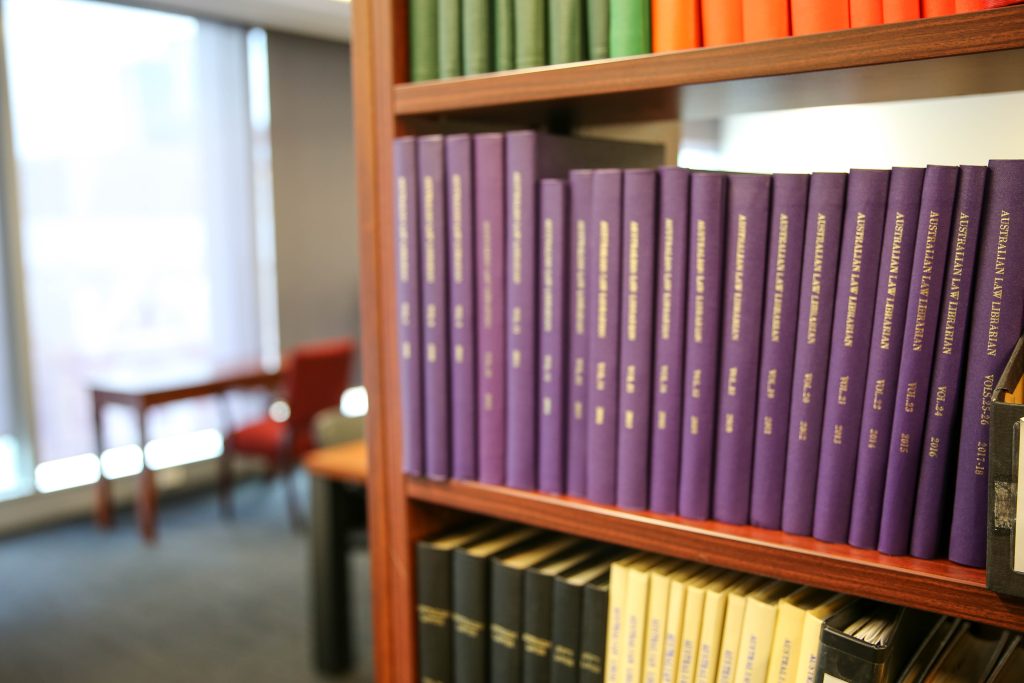
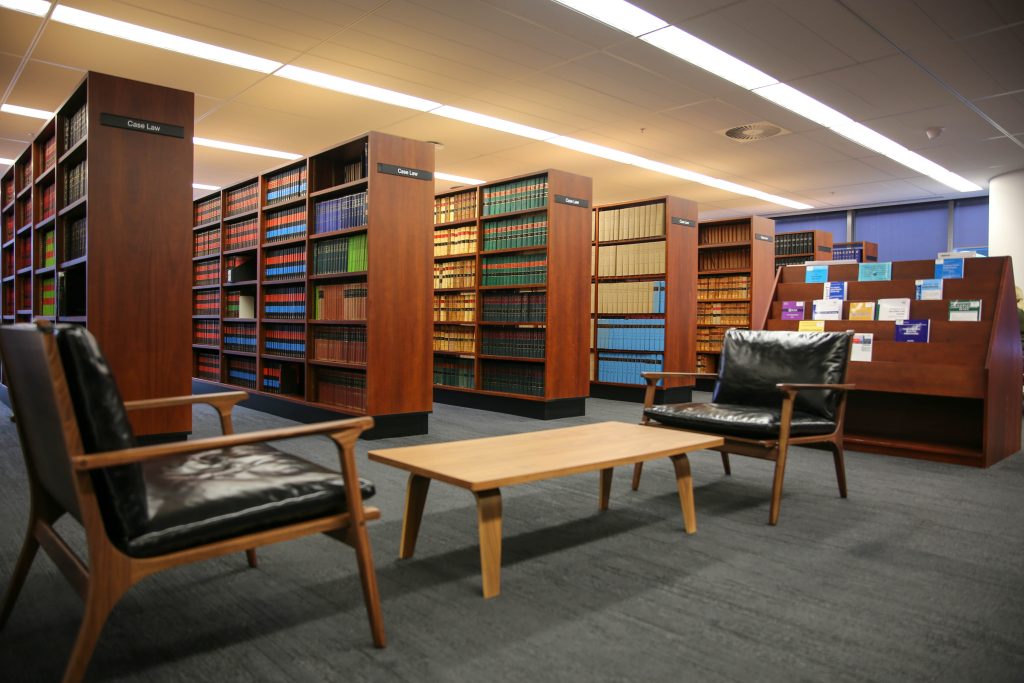
The amalgamation of the two collections was a rigorous and time-consuming project which took over two years leading up to 2016, while continuing to provide our reference desk and library services. Items in The Supreme Court Library collection not held by the Law Library were selected. Duplicate copies of high use texts were kept or transferred to satellite collections. The cataloguing project was complicated by the need to convert Moys classification to Dewey Decimal Classification. Librarians were allocated cataloguing by material type and classification number. We heavily utilised Smartport to download catalogue records and made countless trolley and courier runs to move items over St Georges Terrace from the old Supreme Court Library to the David Malcolm Justice Centre. A contract librarian was employed to assist and by the end of the project the skill level in cataloguing of the whole team (10 librarians) had risen substantially.
The combined collection comprises approximately 100,000 volumes, including hard-copy law reports, journals, and an extensive range of legal texts. As one of the largest legal collections in Western Australia, it includes both historically significant materials and current legal resources. Some of the oldest books may have arrived from the United Kingdom on ships with WA’s early settlers. Rare books from the Chief Justice Robert Furse McMillan (1914 - 1931) collection of the Supreme Court are also held, the oldest being 1657 – ‘Reports of the Reverend and Learned Judge Sir Humphry Winch’. One text, a 1931 edition of ‘the Province of the Law of Tort’ by Percy H. Winfield is stamped “Stalag XXI A", a German Army WW2 prisoner of war camp in Poland.
Print materials are complemented by a wide range of online legal databases. AI upgrades to legal research platforms have been trialled and are currently being considered, taking into account government and department AI policies.
Law Librarians are available to undertake legal research and to source cases, articles, and other materials on request. While not legally qualified, they are highly skilled in legal research methodologies and resources.
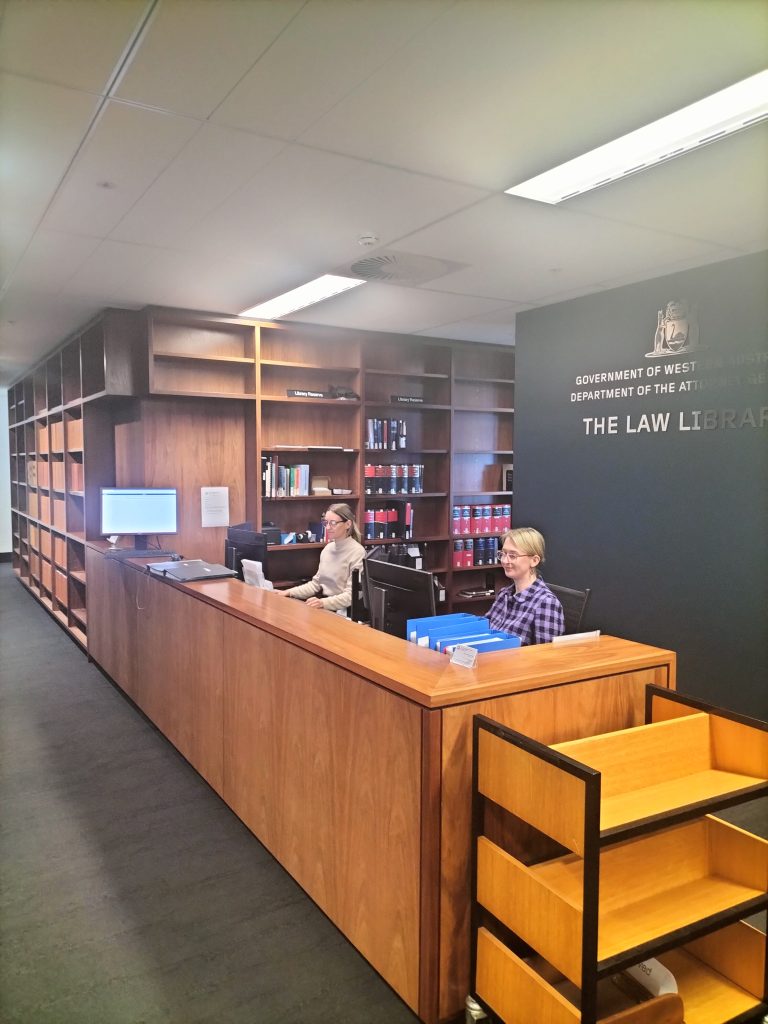
Library staff maintain satellite hardcopy collections and deliver services to courts and tribunals across Western Australia, including the Supreme Court, Family Court, District Court, State Administrative Tribunal, Children’s Court, Magistrates Court, and Coroners Court. Services are also provided to legal offices including the State Solicitor’s Office, the Office of the Director of Public Prosecutions, and the Office of the Solicitor General.
The Law Library uses Symphony library management system and Portfolio to develop the library internal portal and website. Librarians have created “Legal Practice Area” guides, which provide links to relevant legislation, case law, commentary, textbooks, journals, alerting services, and reference materials available through subscribed resources, as well as selected free online sources. These are regularly updated.
The Library also hosts Continuing Professional Development (CPD) sessions focused on legal research.
Further information about services and resources is available on The Law Library website.



0 Comments