

Maintaining children’s engagement with reading over the summer holiday period remains an ongoing challenge for libraries, schools and families. When school routines pause, reading can easily slip from daily life, particularly for families navigating competing priorities or limited access to books. While concerns about a “summer slide” are often framed in educational terms, public libraries approach this challenge differently, positioning reading as enjoyable, voluntary and socially supported rather than as a continuation of school‑based literacy programs.
The Big Summer Read (BSR) is a national, library‑led summer reading campaign delivered locally through public libraries across Australia. Rather than focusing on reading levels or performance outcomes, the program centres reading for pleasure, choice and inclusion. This article explores how the Big Summer Read contributes to building reading culture, how a jointly led national approach strengthens equity and advocacy, and how success can be measured in practical, proportionate ways.
Reading for pleasure and library reading culture
Reading culture is not created through instruction alone. It develops through repeated experiences where reading is visible, valued and embedded in everyday life. Evidence shows that children who read for pleasure are more likely to develop positive attitudes towards reading and to see themselves as readers over time. Voluntary, self‑selected reading supports motivation, confidence and sustained engagement, particularly when children can choose what and how they read (Merga, 2015; Merga, 2017).
Public libraries are uniquely positioned to foster this culture. Free access to diverse collections, professional recommendations and welcoming spaces reinforces reading as something done for enjoyment rather than obligation. Libraries also validate a wide range of reading practices, including graphic novels, audiobooks, genre fiction and re-reading favourites. This helps reduce stigma around what “counts” as reading and supports broader participation.
Summer reading initiatives that foreground pleasure, autonomy and choice align closely with this ethos. When reading is framed as an invitation rather than a requirement, libraries can engage children with different abilities, interests and confidence levels.
How the Big Summer Read works
The Big Summer Read operates through a shared national framework coordinated by Public Libraries Victoria, in collaboration with state and territory library peak bodies. Children register once, either online or in library, and participate by logging the books they read or the days they read across December and January. Digital badges mark progress, with optional prize draws offering light‑touch incentives.
Crucially, the program avoids reading levels, testing and minimum targets. Any book, any format and any genre are welcomed, and success is defined by participation rather than volume. This enables early readers, reluctant readers and confident readers to engage without pressure or comparison.
National coordination provides a central digital platform, shared branding and consistent messaging, while local libraries retain control over how the program is activated in their communities. This balance supports local responsiveness within a collective national initiative.
Inclusion and equity by design
The inclusive design of the Big Summer Read underpins its impact. By removing performance benchmarks, the program affirms that all reading experiences are valid. This is particularly important for children who may feel excluded by school‑based literacy measures or who lack consistent reading support at home.
Delivery through public libraries further strengthens equity. Participation is free and does not require families to purchase books, subscribe to services or access specific technologies. Libraries provide materials, guidance and encouragement without cost barriers, extending summer reading support beyond already confident readers.
Designed for ease of delivery
A key strength of the Big Summer Read is its intentionally low administrative burden. The centrally managed platform removes the need for local technical development, while flexible activation allows libraries to scale their involvement according to staff capacity and local context.
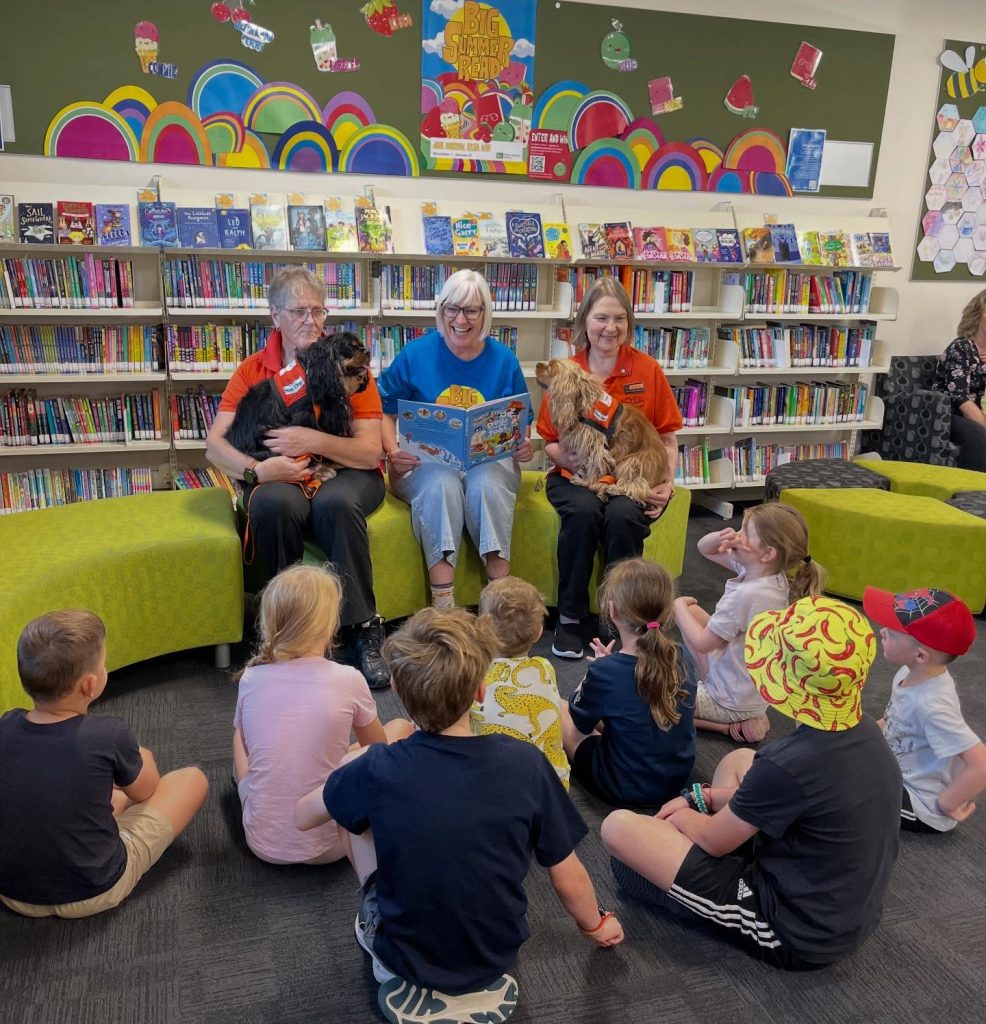
Libraries engage with the program in different ways, from promotion at service desks and online to displays, staff picks and small local incentives. For many services, the most valuable element is informal readers’ advisory: conversations that validate children’s reading choices and reinforce enjoyment. The program avoids a one‑size‑fits‑all model, enabling all libraries to participate meaningfully.
The value of a national, jointly led campaign
Building on its Victorian origins the coordinated national approach to the Big Summer Read delivers impact beyond what individual library services can achieve alone. Strategic leadership from state and territory library peak bodies provides shared infrastructure, consistent governance and sector‑wide coordination.
This model supports equity by enabling children across Australia to access a high‑quality summer reading experience regardless of location or local resourcing. Shared branding, centrally produced resources and a common platform reduce duplication while lowering barriers for smaller and regional services.
The program is further strengthened by the involvement of Australian children’s author ambassadors, who lend their voices and credibility to the campaign. Through reading recommendations, personal stories and messages of encouragement, ambassadors help extend the program’s reach and reinforce reading for pleasure as a valued and visible cultural activity.
National coordination also strengthens advocacy by increasing program visibility and legitimacy with governments, education partners and community stakeholders. Consistent data collection and shared messaging reinforce the case for reading for pleasure as a cultural priority and public good.
Measuring success without adding burden
Evaluating summer reading initiatives requires a balance between simplicity and meaning. A national framework enables lightweight, consistent data collection while respecting local capacity.
Core indicators for the Big Summer Read include participation and engagement, equity and reach, and experience measures such as enjoyment and confidence. Library‑level indicators, including summer circulation trends, new memberships and engagement with communications, provide additional insight. Centralised collection of core metrics reduces workload, while privacy‑by‑design principles support ethical, aggregate reporting.
Building relationships and reader identity
The impact of the Big Summer Read extends beyond participation numbers. By keeping families connected to libraries during the summer period, the program helps maintain relationships that might otherwise weaken when regular programs pause.
For children, repeated experiences of being welcomed as readers support the development of reader identity, regardless of ability or reading preference. For families, positive associations with libraries as places for enjoyable, low‑pressure reading increase the likelihood of ongoing engagement throughout the year.
Conclusion
The Big Summer Read demonstrates how a nationally coordinated, locally delivered initiative can strengthen reading culture by placing pleasure, choice and inclusion at its core. Supported by peak bodies and shared infrastructure, the program reduces delivery burden, supports equitable access and amplifies sector‑wide advocacy.
Ultimately, reading cultures grow through experience. Public libraries create these experiences every day by welcoming readers, supporting choice and making space for reading as a shared cultural activity. The Big Summer Read succeeds because it builds on this everyday practice, sustaining summer reading engagement while reinforcing the cultural value of reading for pleasure.
References
Merga, M. K. (2015). Access to books in the home and adolescent engagement in recreational book reading. English in Australia, 50(2), 10–21.
Merga, M. K. (2017). Reading engagement for tweens and teens: What would make them read more? ABC‑CLIO.
0 Comments