
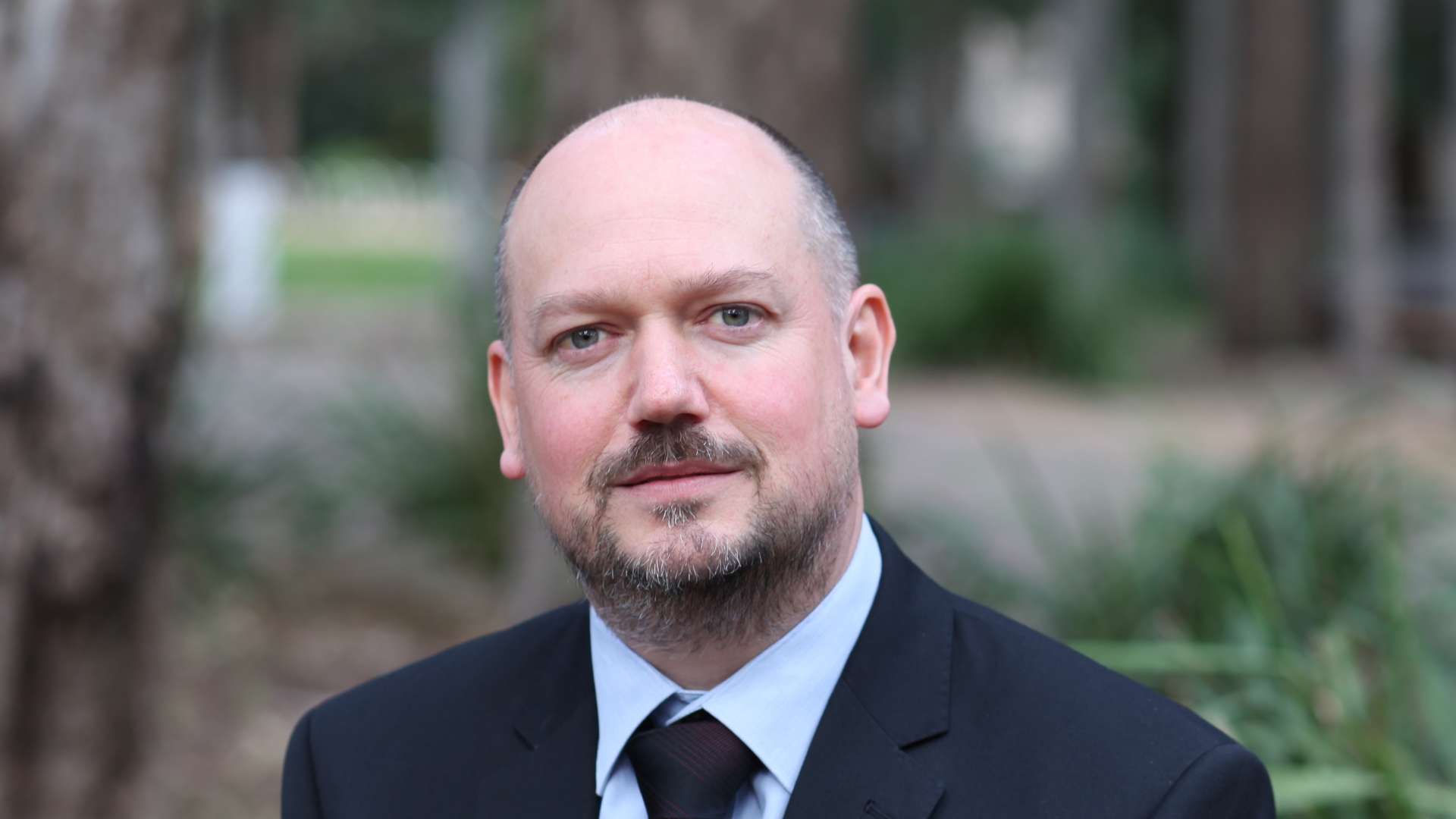
In this edition of Library Stories, James Conroy reflects on an unconventional journey into librarianship and the leadership lessons that shaped it. Drawing on his experience leading digital transformation at the University of Wollongong and UNSW, James explores how trust, culture and human-centred design can unlock meaningful change, and why libraries remain critical knowledge infrastructure in an increasingly digital and AI-enabled world.
In 2018, my career took an unexpected but deeply meaningful turn into the library sector.
I didn’t set out to work in libraries, nor did I arrive with a fixed view of what digital transformation in that context should look like. My early career was firmly grounded in IT, working on legacy modernisation and evolving into service management, enterprise architecture and digital strategy. From that vantage point, transformation was framed through business cases, roadmaps and enterprise platform decisions.
And yet, again and again, when driving change from central IT, delivery stalled. Some business areas resisted change completely; others lacked the vision to think beyond existing ways of working, trying to force modern platforms to work the same way as legacy systems. Benefits were diluted, timelines slipped, and outcomes rarely matched intent. Through this experience, a core insight took shape: digital transformation is fundamentally a leadership challenge, not a technology one.
A pivotal moment came earlier than I realised. During a global study tour in 2016, travelling with a diverse cohort of students across universities in Europe, the UK and the US, I noticed something consistent. When institutions were asked to showcase their exemplar student experience, they took us to the library. Across very different contexts, libraries sat at the centre of learning, belonging, success and were often referred to as the heart of the University. That observation stayed with me.
In 2018 when I began speaking with Margie Jantti, then Director of Library Services at the University of Wollongong (UOW), I encountered a very different kind of challenge. There was a clear and compelling vision for a digital-first library but limited internal capability to drive that change at pace. Even so, the Library was already experimenting with AI-enabled services and was one of the few to explicitly recognise the emerging impact of AI in its strategy at that time. When a role was created in the library executive team to lead digital strategy, I applied - part curiosity, part experiment to test whether transformation could be more effectively driven from within a business unit than from outside it.
What I found when I joined surprised me. The leadership and cultural groundwork were well progressed. Instead of resistance, there was momentum. People were actively looking for ways to work differently. I was welcomed into the UOW Library, and my role quickly became one of guiding and enabling that momentum.
Importantly, the driver wasn’t purely efficiency or cost reduction. It was about making information easier for people to find and use, with the additional benefit of freeing library and academic staff from manual, transactional work so they could focus on higher-value activities. A deceptively simple goal when you consider the scale and complexity of information that libraries manage.
This became increasingly critical in the context of UOW’s growth strategy: multiple onshore campuses, a growing offshore footprint, and expanding online education. Replicating physical infrastructure and services was not viable. A different mindset was required.
One of the earliest and clearest examples of this thinking was how the Library approached queuing. Like many service environments, persistent queues were seen as an operational problem. The typical responses were familiar: queue-management systems, additional staffing at peak times, or improving the waiting experience. Instead, the Library asked a different question: what if the goal wasn’t to manage queues better, but to eliminate them altogether?
That reframing required letting go of physical metaphors such as a single “front door” - a concept that simply doesn’t translate into a digital environment. Services could instead be designed to meet people where they are, at the moment they need support, and in ways that are intuitive enough to reduce reliance on physical service points. Applying a human-centred design lens shifted the focus from optimising bottlenecks to redesigning services and digital access to address the problem at its source and enable users through self-agency.
The same principles shaped how the Library approached its own ways of working. Around 2017 staff had co-designed an exemplar physical workspace as a prototype for activity-based working within the University. In 2019, these principles were extended into the digital environment. Microsoft Teams was implemented as a deliberately designed digital workplace. A single shared space, open by default and secure where required. Functional channels were complemented by breakout spaces for projects, communities of practice, professional development and informal connection.
When COVID arrived, the Library did not need to scramble. It transitioned fully into the digital workplace without disruption. This was not an emergency response, but the continuation of ways of working that had already been embedded in culture.
That maturity was tested further during the pandemic. When the University asked divisions to identify savings while maintaining operational continuity, more than a quarter of the Library workforce applied for voluntary early retirement. For reasons of equity and fairness, the Library executive supported all applications. This was only possible because of earlier investment in capability uplift, succession planning, process and system modernisation, and resilient ways of working. More importantly, it reflected a high level of trust, from both the University executive and staff in the Library executive’s ability to lead change from within.
The outcome was significant: millions of dollars in recurrent salary savings, maintained service continuity through a period of unprecedented disruption – digital services mitigated safety risks and UOW library was one of the few that remained open throughout COVID, and accelerated progress in transformation alongside improvements in client and staff satisfaction. Savings were never the primary driver, but they became evidence of what is possible when leadership, trust and vision are aligned. We had provided a blueprint for how digital transformation could be effective through leadership principles of trust, transparency and accountability.
By the end of my initial term in the digital strategy role at the end of 2023, I had expected to return to the IT sector. Instead, I found my time in the UOW Library to be the most professionally rewarding of my career. Librarianship is a values-based profession, grounded in equity, accessibility and inclusion - values that align closely with my own. What began as an experiment became a long-term commitment.
My recent role at UNSW Library as Director, Information Services further reinforced the importance of human-centred leadership in a much larger scale environment. Working within a supportive leadership model, with responsibility for front‑facing service portfolios, the focus has been on providing strategic clarity and trust, enabling highly capable teams to exercise their expertise and judgement. This has been an extremely valuable and enjoyable experience, and there are many lessons I’ll take to my next role.
In May 2026, I will return to UOW as University Librarian and Director, Library Services.
Like much of the higher education sector, the Library has continued to operate through a period of significant disruption and change. Some of that change has been challenging given past results delivered by the library. Even so, a highly capable, committed and values‑driven team remains, and the foundations built over the past decade continue to matter.
As higher education navigates increasing complexity, declining trust in information, and rapid technological change, libraries have a critical role to play in shaping the future of the university. Beyond collections, services or spaces, libraries must be understood and sustained holistically as core knowledge infrastructure, anchoring learning, enabling research impact, growing digital information capabilities, and safeguarding equitable access to trusted information in an increasingly digital and AI‑enabled world. As both the intellectual heart and a steward of institutional values, libraries help ensure universities continue to serve as trusted places of knowledge, integrity and inclusion.



0 Comments