
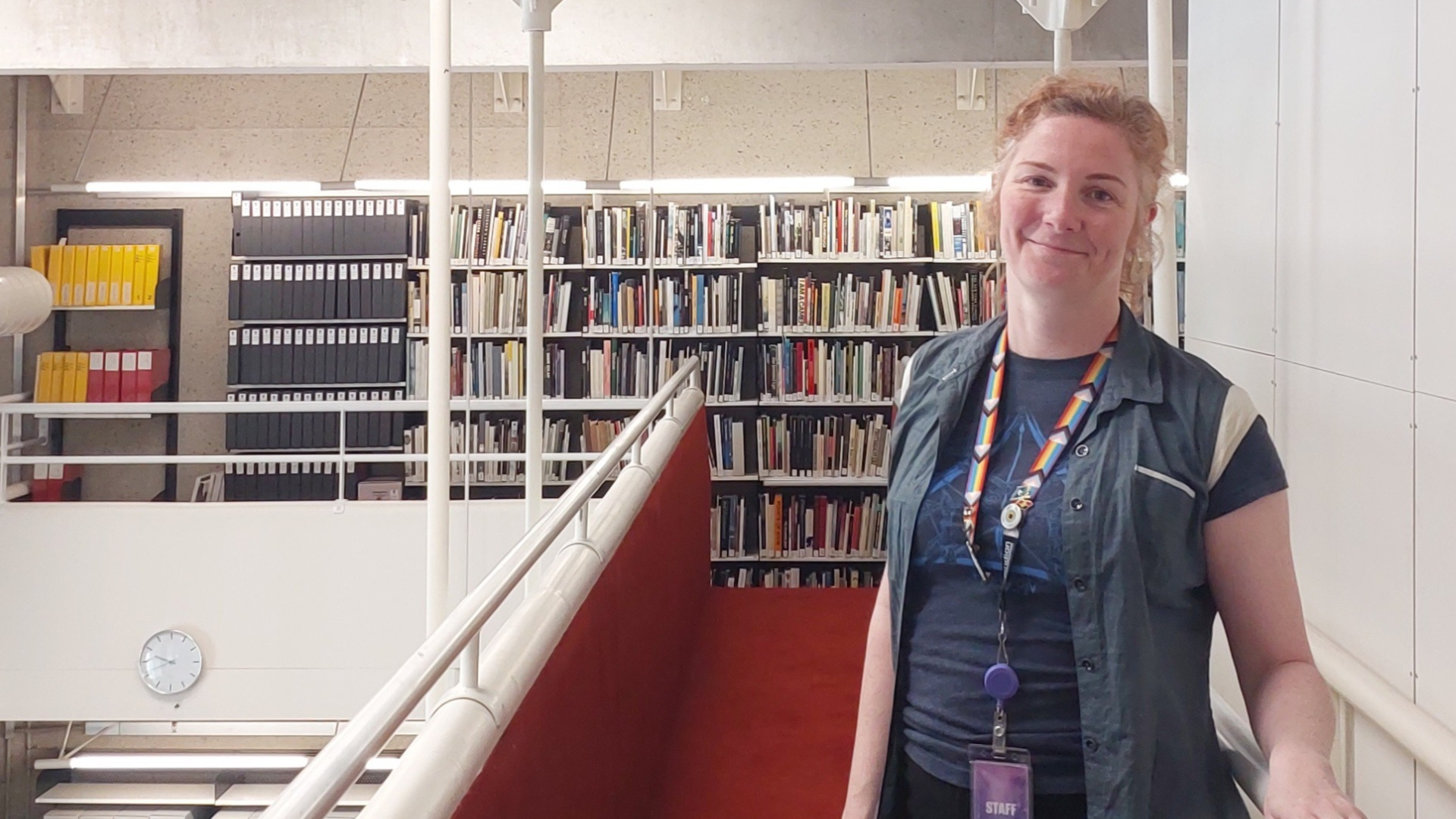
The Research Library & Archives – originally known as the Research Library – has been part of the National Gallery since its conception. Back in the 1970s, before the Australian National Gallery was even open, the Library’s collection was being developed alongside the Works of Art (WOA) for the National Art Collection. In the beginning, it aimed to collect comprehensively and be the eminent repository for art research resources in Australia, as very few existed at the time. Today, the Research Library & Archives (RLA) is still one of the largest collections of visual arts research materials in the southern hemisphere. But, like many cultural institutions and libraries in recent years, social, digital and economic shifts have meant we’ve needed to rethink our collection strategy, purpose and modes of access. The RLA is now divided into three collection areas that function as a single resource: the Archives, Special Collections, and Reference Library.
The Reference Library is what most people would think of when they think of a “normal” library – a collection of approximately 150,000 commercially published art books, magazines and journals. Our specialist strengths include Australian and First Nations art, Asian and Pacific art, photography, and decorative arts. Nowadays, the main purpose of this collection is for operational and reference work by the NGA staff, and is primarily reserved for their exclusive use, rather than public availability.
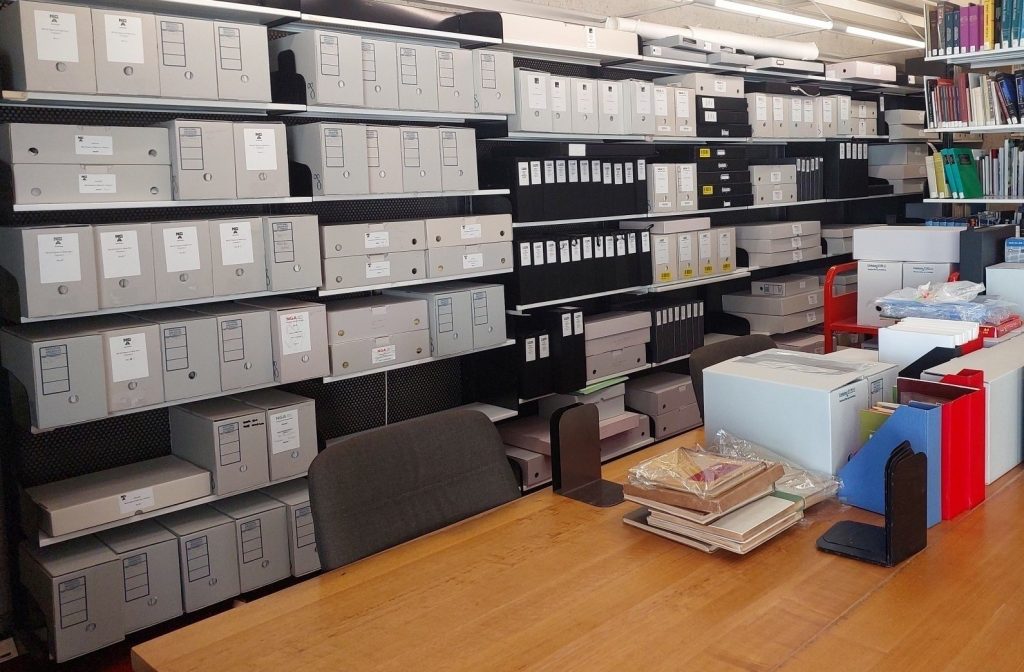
In our Archives area we have over 160 artist and art-related organisation archives – these contain original documentary material such as letters, diaries, sketchbooks, photographs, and sound recordings. Because of their primary connection to artists and their practices, organisations, or art scenes, these materials enable a deeper understanding and interpretation than gained through commercial publications. They can also allow the RLA to connect to other cultural collections and organisations around the world, facilitating sharing of knowledge.
For example, working on the archive of Maximillian Feuerring, we discovered the other “half” of a series of letters between the artist and Austrian-Israeli art historian Otto Schneid, at the Thomas Fisher Rare Book Library, University of Toronto. It demonstrated the sorts of connections Feuerring developed and maintained, not only with other artists and art professionals, but also fellow Jews who had been persecuted in Poland and Europe during Nazi reign. In addition, it showed the shared value Schneid and Feuerring saw in retaining this correspondence, for both sets of letters to end up in archives on opposite sides of the world.
Similarly, our Special Collections can provide important insights about art scenes and artist activity, which can sometimes be hard to come by for Australian art. Our extensive collection of sales catalogues from Australian auction houses and galleries supply invaluable WOA provenance information, especially where those organisations no longer exist. They also provide an interesting snapshot into the art culture of the time – what was publicly popular, who was purchasing, and the influences of overseas art movements on Australian artists. Such details can also be found in our Art & Artist Files, which consist of ephemera such as exhibition promotional cards and leaflets, media releases, and press clippings. They are probably our most highly used resource by Curatorial staff, because they frequently document smaller exhibitions, including the specific WOA shown, which may not be recorded elsewhere.
The RLA holds rare and vintage books and serials as part of our Special Collections. These are some of our most unique items, and in some cases can be classed as Works of Art themselves. One item of note is our limited-edition 1977 art book of the play Le cœur à gaz [the gas heart], which includes Sonia Delaunay’s 1923 theatrical costume designs. It is one of only 25 copies, is signed by Delaunay, and contains beautiful lithographic reproductions of her abstract, solid-colour costumes. It is printed on specialised fine-art paper and has tri-fold pages that allow the images to be laid out and viewed all at once. Because of these aesthetic properties, it was included as part of the exhibition Know My Name: Kee, Jackson and Delaunay (2025).
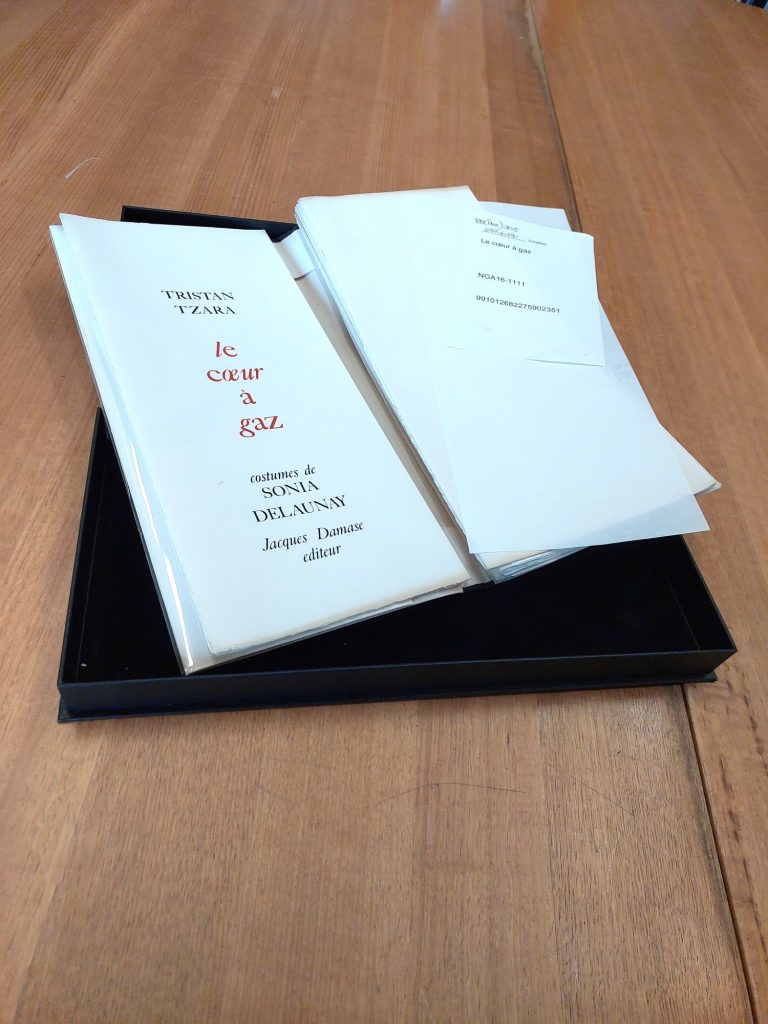
It is one of only 25 copies, is signed by Delaunay, and contains beautiful lithographic reproductions of her abstract, solid-colour costumes. It is printed on specialised fine-art paper and has tri-fold pages that allow the images to be laid out and viewed all at once. Because of these aesthetic properties, it was included as part of the exhibition Know My Name: Kee, Jackson and Delaunay (2025).
The incorporation of RLA materials into exhibitions is an important part of our contribution to Gallery operations, not only to add extra visual elements, but to provide additional context and meaning. And it isn’t just our rare and vintage items that are included; a wide variety of other Special Collections items and Archives material have been used in NGA exhibitions, activities, and media. This, along with our provision of Reference Library materials for staff, broad suite of resources for all researchers, art reference services, and close working relationships with Curatorial staff, aligns with the Research Library & Archives’ core function: to support the art collections, research, and programs of the National Gallery of Australia.
For questions relating to RLA collection materials, access and resources, the Research Library & Archives can be contacted through our online enquiry form. In-person access to the RLA is by appointment only, for researchers wanting to examine our unique collection material. For more information about the RLA, please visit our website and browse our catalogue.



0 Comments